
Storage and Management of Excavator Hydraulic Seals: Extending Shelf Life and Preventing Premature Failure
For B2B wholesalers, repair technicians, and fleet managers, procuring high-quality excavator hydraulic seal kits is just the first step in ensuring reliable equipment operation. The storage and management of seals are equally crucial. Improper storage conditions can lead to seal failure even before installation, resulting in unnecessary costs and downtime. DJF Seal, as a professional hydraulic seal factory, not only provides excellent products but also emphasizes correct storage and management practices to ensure seals perform at their best.
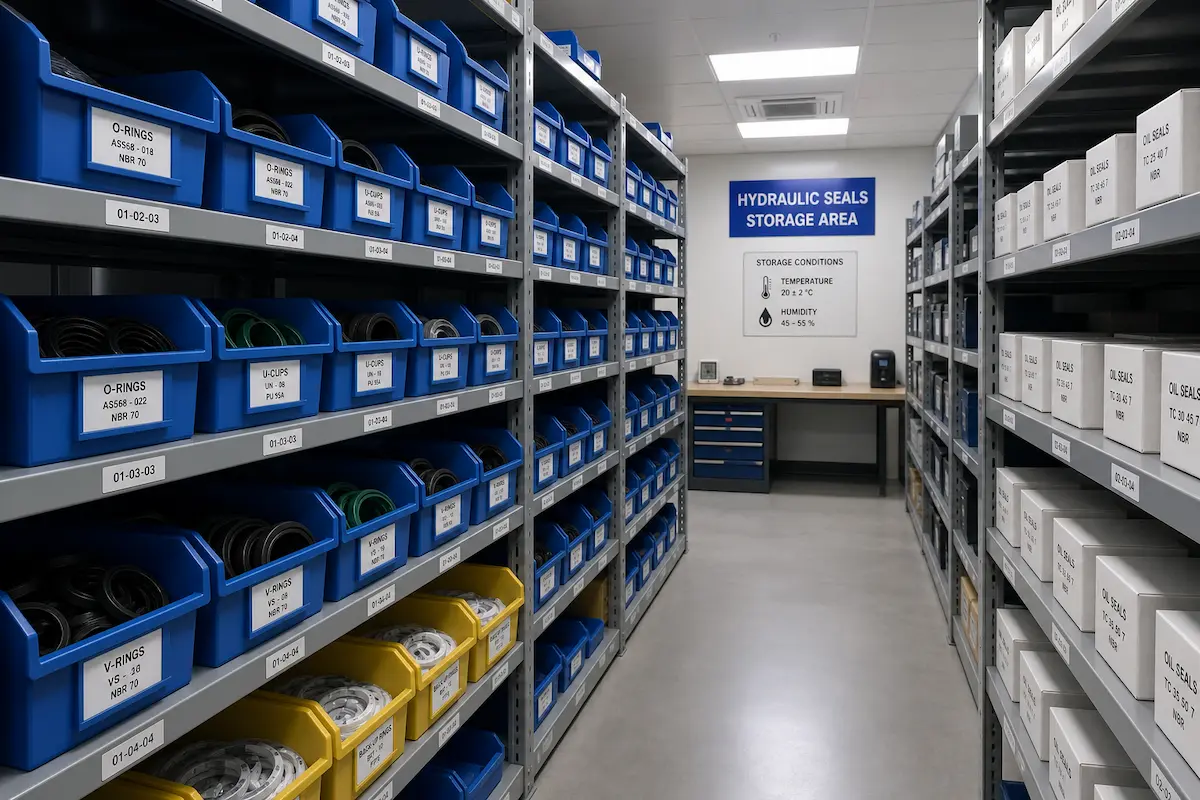
Why is Proper Storage Crucial?
Hydraulic seals, especially those made of rubber and plastic, are highly sensitive to environmental conditions. Improper storage can lead to material aging, deformation, or degradation of performance, causing even brand-new seals to lose their sealing capability.
Storage Factors Affecting Seal Lifespan:
- Temperature: Excessively high or low temperatures accelerate material aging, leading to hardening, cracking, or loss of elasticity.
- Humidity: High humidity can cause hydrolysis in some materials, while low humidity can lead to drying and cracking.
- Light Exposure: Ultraviolet (UV) radiation can break down the molecular structure of rubber and plastics, causing surface cracking and performance degradation.
- Ozone: Ozone has a strong oxidizing effect on many elastomer materials, leading to surface cracks.
- Stress: Improper stacking or hanging can cause permanent deformation of seals.
- Chemicals: Contact with solvents, paints, acids, alkalis, and other chemicals can corrode seal materials.
Best Practices for Hydraulic Seal Storage
Following these best practices can significantly extend the shelf life of hydraulic seals, ensuring they maintain optimal performance when needed:
1. Control Environmental Conditions
- Temperature: Store in a cool, dry, and well-ventilated place, with an ideal temperature range of 5°C to 25°C. Avoid direct sunlight and heat sources.
- Humidity: Maintain relative humidity below 65% to avoid damp environments.
- Light Exposure: Store in opaque packaging, or in cabinets and drawers away from light, to avoid UV and strong light exposure.
- Ozone: Avoid storing seals near ozone-generating equipment (e.g., electric motors, fluorescent lamps, high-voltage equipment).
2. Proper Packaging and Stacking
- Original Packaging: Whenever possible, keep seals in their original sealed packaging, which usually provides the best protection.
- Categorized Storage: Classify and clearly label seals by type, size, and material for easy access and management.
- Avoid Stress: Avoid stacking too high or hanging seals to prevent permanent deformation. For large or heavy seals, store them flat.
3. Avoid Chemical Contact
- Ensure the storage area is away from any substances that could cause chemical contamination, such as solvents, fuels, lubricants, acids, and alkalis.
4. First-In, First-Out (FIFO) Principle
- Implement the “First-In, First-Out” inventory management principle to ensure older seals are used first, preventing inventory buildup and expired storage.
DJF Seal: Providing Reliable Seals and Expert Advice
DJF Seal understands the importance of seal storage. Our excavator hydraulic seal kits are manufactured from high-quality materials and provided with professional packaging to ensure their integrity during transportation and storage.
- Premium Materials: Our seals are made from high-quality materials resistant to aging and environmental degradation.
- Professional Packaging: We provide moisture-proof, light-proof, and dust-proof packaging to maximize product protection.
- Technical Support: We offer professional advice on seal storage and management to our B2B partners.
Proper storage and management are key to extending the lifespan of hydraulic seals and ensuring efficient excavator operation. Choose DJF Seal not only for excellent sealing products but also for comprehensive solutions. Contact us to explore our product range and get wholesale quotes.
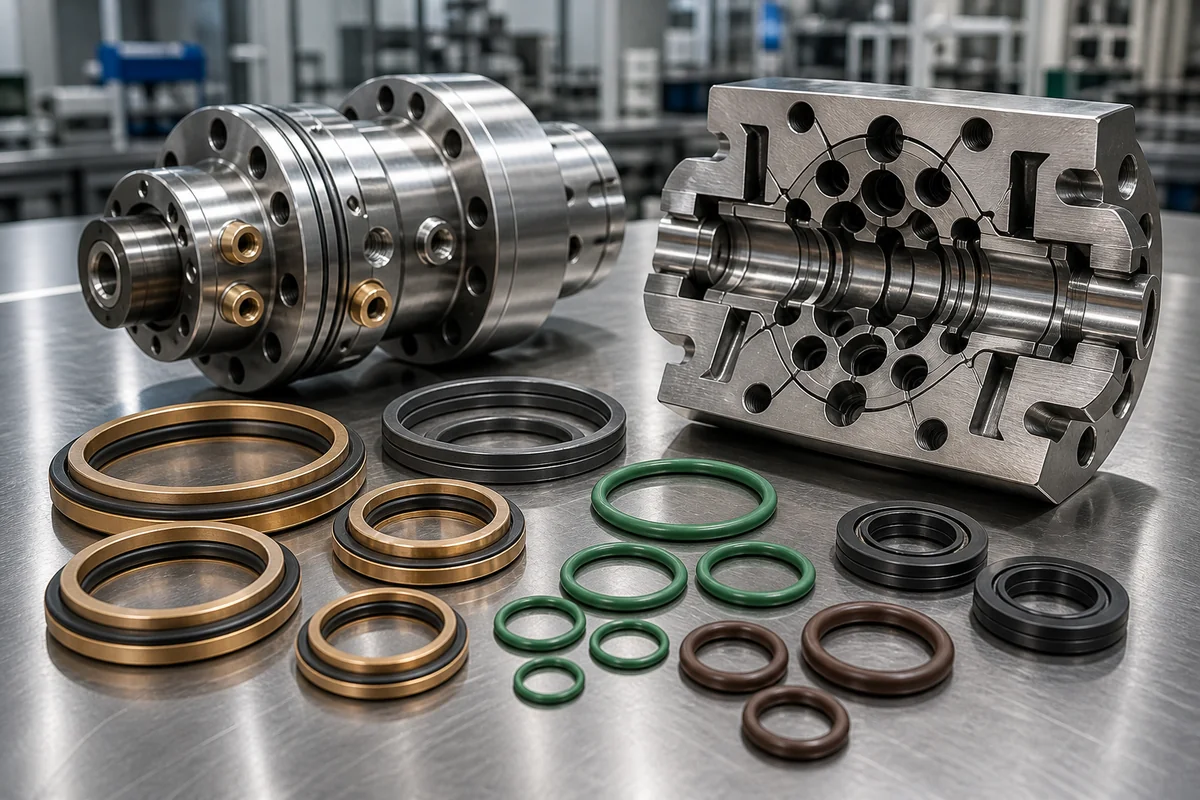 Excavator Center Joint (Swivel Joint) Seal Kits: Internal Cross-Port Leakage Troubleshooting, PTFE Step-Seal Selection & B2B Overhaul Guide
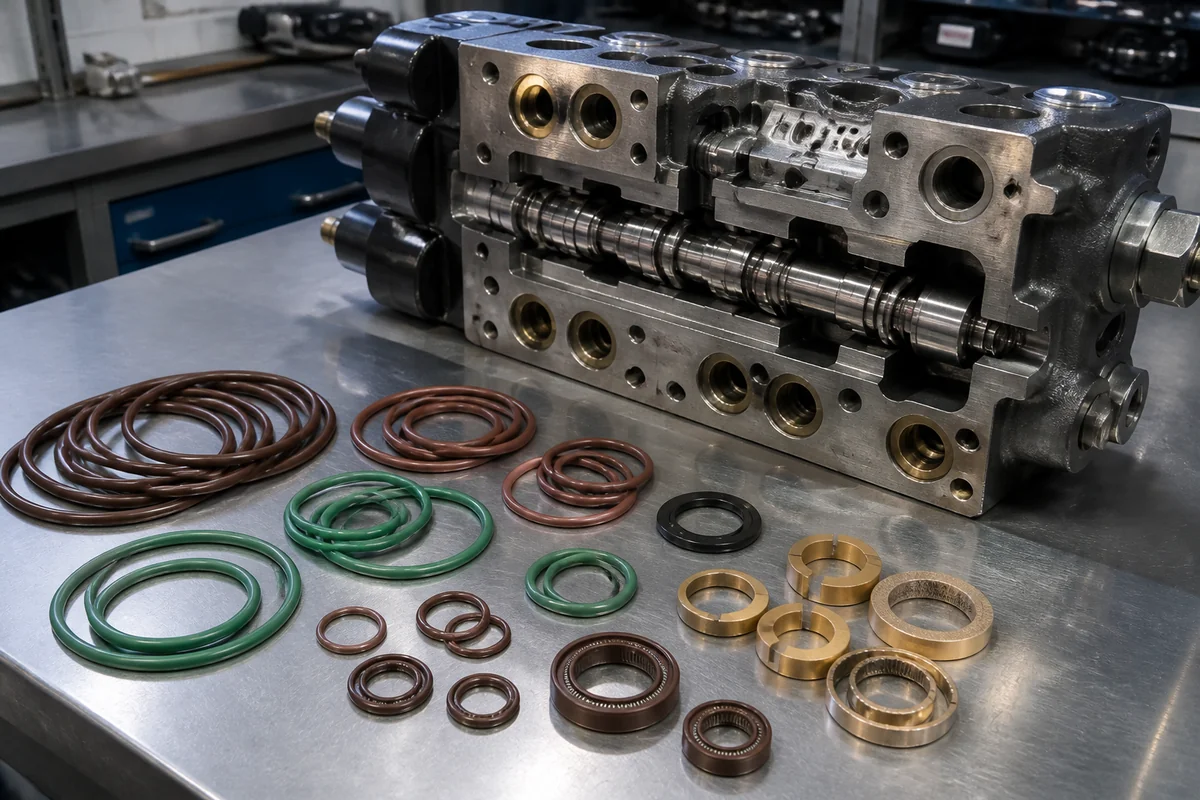 Excavator Main Control Valve Seal Kits: Spool Leakage Troubleshooting, Material Selection & B2B Sourcing Guide
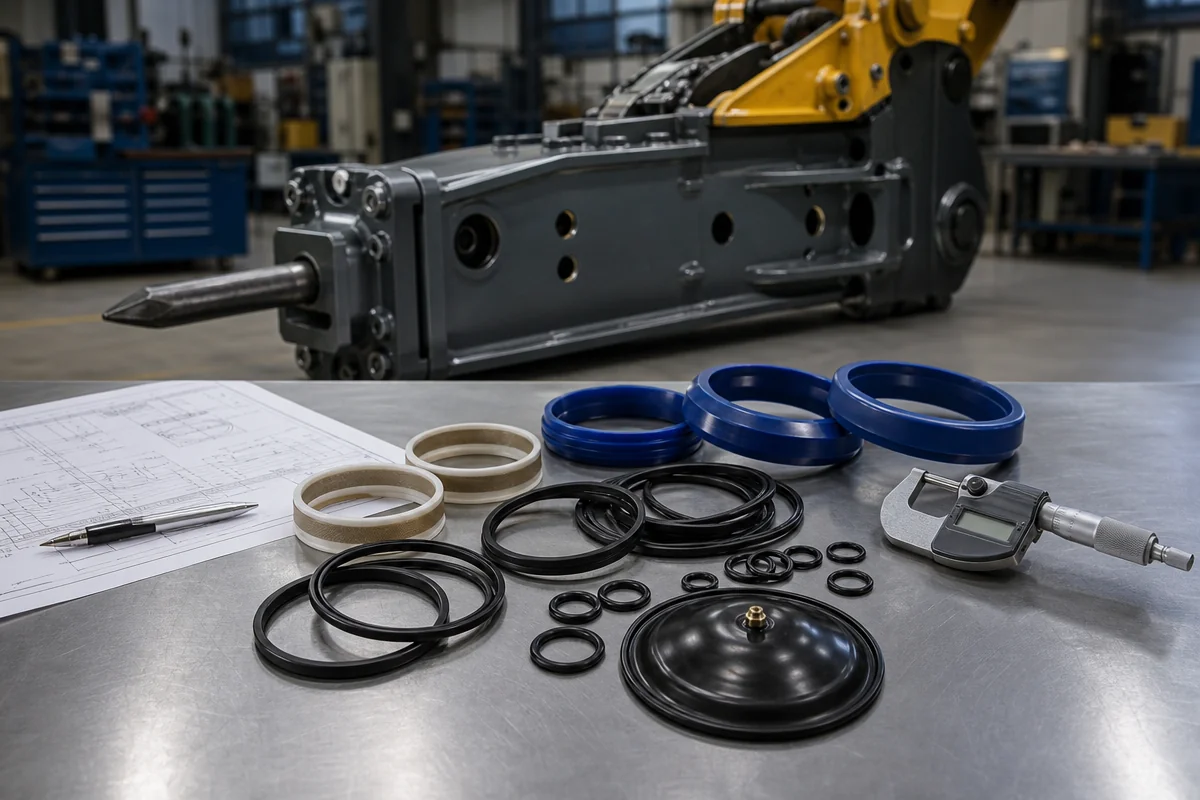 Hydraulic Breaker Hammer Seal Kits: B2B Sourcing, Material Selection, and High-Frequency Shock Protection Guide
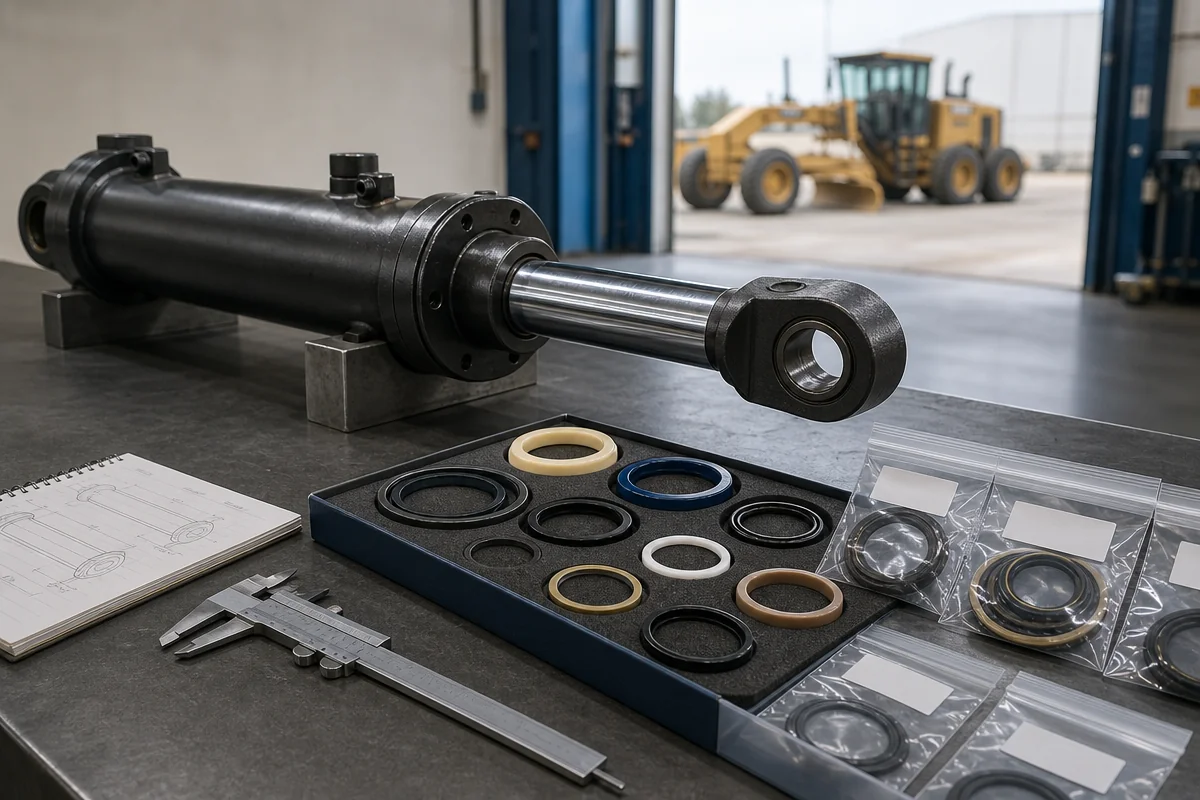 Motor Grader Hydraulic Cylinder Seal Kits: A B2B RFQ and Selection Guide