
Crane Hydraulic Seal Kits for Mobile and Crawler Cranes: A B2B Sourcing and Maintenance Guide
Cranes earn their keep only while they are working, which is why unplanned hydraulic downtime on a jobsite is measured in lost lift hours, not just repair invoices. On a mobile crane, the outrigger, telescopic boom, and luffing cylinders are directly involved in setting up the machine and positioning the load; on a crawler crane, track tensioning, counterweight handling, and mast or gantry systems add more cylinders in positions that are often awkward to reach. For B2B distributors, crane repair shops, rental fleets, and project procurement teams, sourcing the right crane hydraulic seal kits is therefore a data-driven exercise: identify the cylinder, verify the part number, specify the kit contents, check the samples, and confirm the commercial terms. This guide focuses on the crane-specific side of that process — the cylinder applications you will encounter, the RFQ information that actually matters, and the checks to run after a repair — so your team can order with fewer returns and fewer second trips to the machine.
Why crane hydraulics deserve a dedicated checklist
Crane cylinders share basic components with other heavy equipment, but the operating conditions are different enough that a generic parts list is rarely a safe shortcut. A truck crane can spend hours traveling between sites, exposing outrigger and boom cylinders to road spray, salt, and vibration, and then work a hard lift in cold weather the next morning. A crawler crane may sit idle for weeks on a project and then be asked to hold a suspended load with precise control. Telescopic boom sections move against each other under heavy side loads, and outrigger cylinders operate partly exposed to mud, dust, and stone chips that a machine kept in a workshop never sees.
None of this means crane seals are exotic. It means the kit contents, the material choice, and the documentation should be checked against the actual machine rather than assumed from a similar-looking cylinder. The safest habit is to treat every cylinder as a separate engineering identity with its own part number, its own revision level, and its own set of seals.
Cylinder applications in mobile and crawler cranes
Crane hydraulic cylinders fall into recognizable groups, and knowing which group a cylinder belongs to makes it much easier to collect the right data for an RFQ. On mobile cranes the most common groups are outrigger cylinders, telescopic boom cylinders, and luffing cylinders, with jib offset and counterweight functions on larger models. Crawler cranes add track tension cylinders and the various cylinders used to erect masts, move counterweights, and position luffing jibs. Hoisting itself is driven by winches and drums on most crane designs rather than by cylinders; where a cylinder is involved in a hoist-related function, treat it strictly according to the OEM manual, because configurations vary significantly between manufacturers and machine generations.
| Cylinder group | Typical crane type | Primary function | Data to record for the RFQ |
|---|---|---|---|
| Outrigger cylinders | Mobile and truck cranes | Extend, level, and stabilize the machine before lifting | Bore and rod sizes, stroke, quantity per machine, exposure to road spray and site dirt |
| Telescopic boom cylinders | Mobile cranes | Extend and retract boom sections as part of the telescoping sequence | Section geometry, sealing positions between sections, extension sequence per the OEM manual |
| Luffing cylinders | Mobile and crawler cranes | Raise and lower the main boom or luffing jib | Working angle, rod-side exposure, dynamic loading (confirm with supplier if not documented) |
| Counterweight and mast cylinders | Crawler cranes | Move counterweights and erect masts or gantries | Actuation speed, holding duty, quantity per machine |
| Track tension cylinders | Crawler cranes | Adjust track tension | Small bore and rod sizes, frequent debris and weather exposure |
| Hoist-related cylinders (where fitted) | Lattice-boom configurations | Support certain position changes; hoisting itself is normally winch-driven | Verify against the OEM parts manual — configurations vary; confirm with supplier |
Record the information in the right-hand column before you contact any supplier. If a value such as working pressure or extension speed is not documented on the machine or in the OEM manual, write “confirm with supplier” on the RFQ rather than inventing a figure — a wrongly assumed pressure can lead to an unsuitable seal material.
What a crane seal kit should contain — and what to confirm
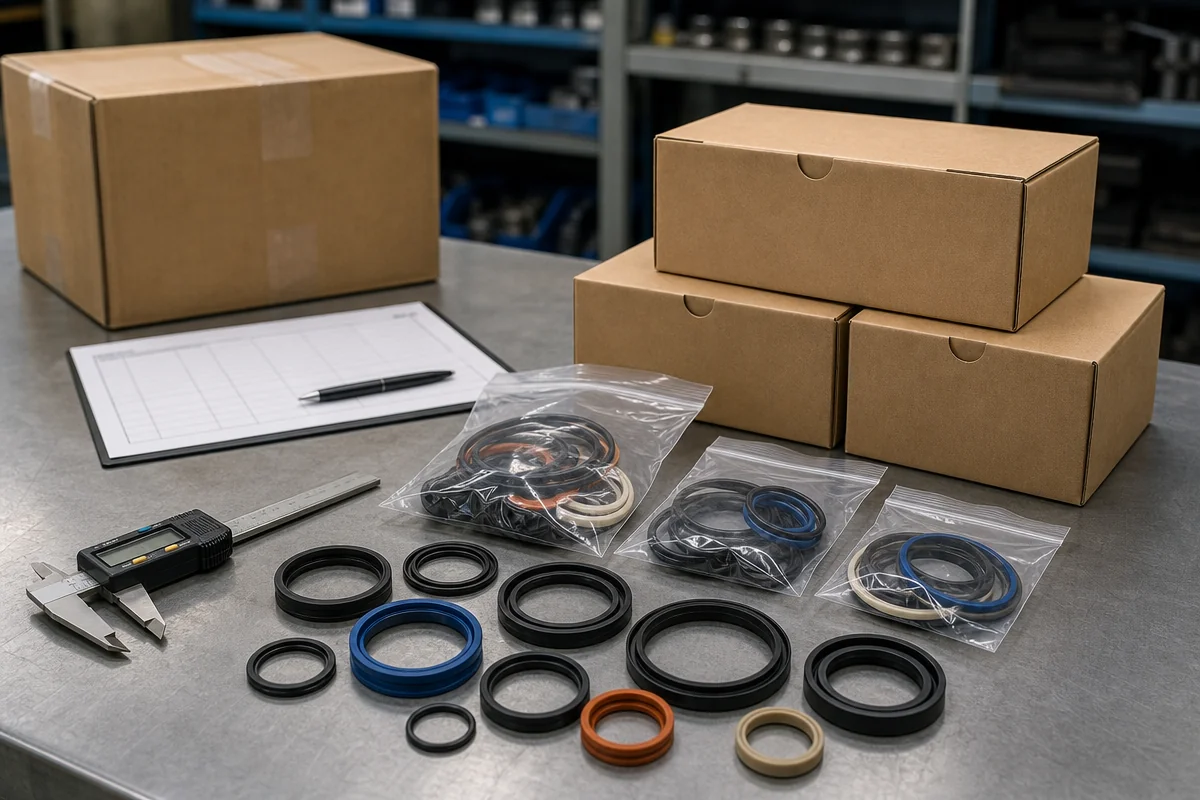
A crane cylinder seal kit is normally a bundle of sealing elements for one cylinder: a rod seal, a piston seal, a wiper or scraper, backup rings, O-rings, and the guide or wear elements specified by the cylinder design. The exact contents differ from one OEM to the next, so the first question to ask any supplier is whether the kit covers every sealing point in that specific cylinder or only the dynamic seals. Ask for a written kit content list per part number and compare it with the OEM seal arrangement drawing.
For crane cylinder seal kits ordered in fleet quantities, standardization matters as much as the parts themselves: one kit per cylinder, one part number per kit, and a consistent packing list make warehouse picking and repair-shop kitting far less error-prone.
OEM part numbers — verify before you order
The OEM part number is the single most reliable identifier for a crane seal kit, but only if it is captured correctly. Look for the part number in the OEM parts manual, on the cylinder nameplate or stamping, and in the machine’s hydraulic schematic. Record the machine serial number and the cylinder serial number as well — manufacturers revise parts, and the same kit number may not fit an older cylinder revision.
When an aftermarket supplier offers an interchange for the OEM number, ask for their reference documentation and compare it with the OEM drawing. If the numbers do not line up, or if the machine year and the cylinder revision are unclear, confirm with supplier before ordering. A returned kit costs more than a careful verification, especially when the machine is already in the workshop with the cylinder disassembled.
The RFQ data checklist for crane hydraulic seal kits
A complete RFQ saves both sides of the transaction time. For every cylinder, include the following data:
- Crane make, model, year, and serial number
- Cylinder function (outrigger, telescopic, luffing, counterweight, track tension, and so on)
- Cylinder OEM part number and revision, if available
- Bore diameter, rod diameter, and stroke
- Number of identical cylinders on the machine and total quantity needed
- Operating environment (temperature range, dust, weather exposure, road transport)
- Hydraulic fluid type used by the fleet
- Required kit contents and whether full kits are preferred
- Documentation required: material certificates, dimensional report, batch traceability
- Packaging preference and delivery location
- Target timeline
The working pressure of the system belongs in this list whenever it is available from the spec plate or the OEM manual. If it is not available, mark the field as unknown and confirm with supplier before they recommend a material. The same applies to any parameter the fleet has not measured — a blank field is honest and useful; a guessed number is not.
Good RFQs also state how the kits will be used. Mobile crane seal kits are often ordered per machine so a repair shop can grab one box and know it contains everything for that cylinder, while a rental fleet may prefer kits grouped by cylinder family to simplify stock levels.
Sourcing approaches compared
Distributors and repair shops typically choose between four ways to obtain replacement seals for crane cylinders. Each route has a different balance of cost, certainty, and documentation, so it helps to compare them before committing to a supplier.
| Sourcing route | What you gain | Main risks | Best fit |
|---|---|---|---|
| OEM replacement kit | Guaranteed fit and revision match | Higher cost; longer lead times; limited availability for older cranes | Machines under warranty and safety-critical functions where OEM policy requires it |
| Documented aftermarket kit from a specialist | One order per cylinder; consistent kit contents; traceable batch data | Interchange must match the OEM revision exactly | Out-of-warranty fleets and repair shops that standardize kitting |
| Component-by-component sourcing | Flexibility for unusual sizes | Missing small parts; mismatched compounds; more administration per repair | Rare machines where full kits are not available |
| Used or salvaged seals | Low upfront cost | No documentation; unknown service life; safety risk on lifting equipment | Not recommended for crane cylinders |
For most B2B buyers, a documented aftermarket kit offers the best balance for out-of-warranty machines, but the decision belongs to your team and your safety procedures. If you are evaluating a new source, the same indicators we use in our guide to vetting your hydraulic seal supplier apply: documentation discipline, dimensional verification, and consistent communication.
Samples, dimensions, and material documentation
Before any bulk order, request samples and verify them against the OEM drawing. At minimum, check the rod seal and piston seal seats in the actual cylinder grooves with a caliper, compare the seal cross-sections, and confirm the hardness of the elastomer if the kit specification states a Shore value. Ask the supplier for a material certificate or compound data sheet and check that the temperature range and fluid compatibility cover the crane’s operating conditions — cold-climate fleets and tropical fleets may legitimately need different compounds, so “confirm with supplier” is the right answer when the certificate does not match the machine’s environment.
Keep a copy of the dimensional report for each approved sample. It becomes the reference for future orders and for resolving disputes if a later batch differs. This is also the point where a documented supplier separates itself from a parts trader: batch numbers, inspection records, and a clear interchange statement are the difference between a kit you can trace and a box of unknown rubber.
For teams already familiar with our guide to choosing the right hydraulic seal kits for your excavator, the crane workflow follows the same discipline: identify the cylinder, verify the drawing, sample the kit, and only then scale the order.
Packaging, MOQ, and delivery — confirm before you commit
Commercial details are easy to overlook and expensive to get wrong. Before placing an order for crane hydraulic seal kits, confirm with supplier:
- Whether each kit is packed individually and labeled with the OEM and aftermarket part numbers
- Whether small parts such as O-rings and backup rings are included in the kit or sold separately
- MOQ per kit number and MOQ per order
- Lead time for samples and for production batches
- Delivery terms, incoterms, and the shipping method to your warehouse
- Shelf-life guidance and storage conditions for the seal compounds
- Whether batch numbers are marked on the packaging for traceability
None of these answers should be assumed. Two suppliers can quote the same part number with very different kit contents and delivery conditions, and the difference only appears when the box arrives. For buyers sourcing internationally, the questions above are the same ones we cover in our guide to importing hydraulic seal kits from China — start with a clear specification, confirm the details in writing, and keep the samples as the reference.
Functional checks after a repair
Whether the job is a scheduled overhaul or an emergency crawler crane seal repair between projects, the cylinder should not return to service on paperwork alone. After assembly and before the crane is loaded, run the standard checks used in your workshop, adapted to the OEM service manual:
- Cycle the cylinder at low pressure through full extension and retraction to confirm smooth travel and to bleed air
- Increase to working pressure and inspect the rod seal and all static joints for external leakage
- Perform a hold test on outrigger, counterweight, or luffing cylinders and measure any drift over a defined period
- Check the rod surface for scoring or rust that would damage a new seal, and correct it before final assembly
- Log the repair: cylinder serial, kit part number and batch, date, and technician
Functional checks are part of the repair, not a separate quality step, and the acceptance criteria should come from the OEM service manual. If the machine operates outside the parameters documented for the kit — for example, at pressures the supplier was never given — confirm with supplier before putting the cylinder back into heavy service.
Building a sourcing routine for crane hydraulic seal kits
A sourcing routine turns one-off purchases into a manageable stock program:
- Build a seal kit register for the fleet: one line per cylinder with crane model, cylinder function, OEM part number, bore, rod, stroke, and quantity.
- Standardize the RFQ template so every supplier receives the same data.
- Order samples for any new part number, verify them, and archive the dimensional report.
- Approve suppliers that provide documentation, then consolidate orders.
- Review annual consumption and set realistic safety stock per kit number.
The goal is not to buy more, but to buy better: fewer wrong kits, shorter downtime, and a paper trail that a rental fleet or a project procurement team can rely on when a machine is down and the replacement must be right the first time. Hydraulic seals for cranes are a small line item compared with the cost of a crane being out of service — the extra hour of verification on the front end is usually the cheapest insurance a fleet can buy.
 Excavator Center Joint (Swivel Joint) Seal Kits: Internal Cross-Port Leakage Troubleshooting, PTFE Step-Seal Selection & B2B Overhaul Guide
 Excavator Main Control Valve Seal Kits: Spool Leakage Troubleshooting, Material Selection & B2B Sourcing Guide
 Hydraulic Breaker Hammer Seal Kits: B2B Sourcing, Material Selection, and High-Frequency Shock Protection Guide
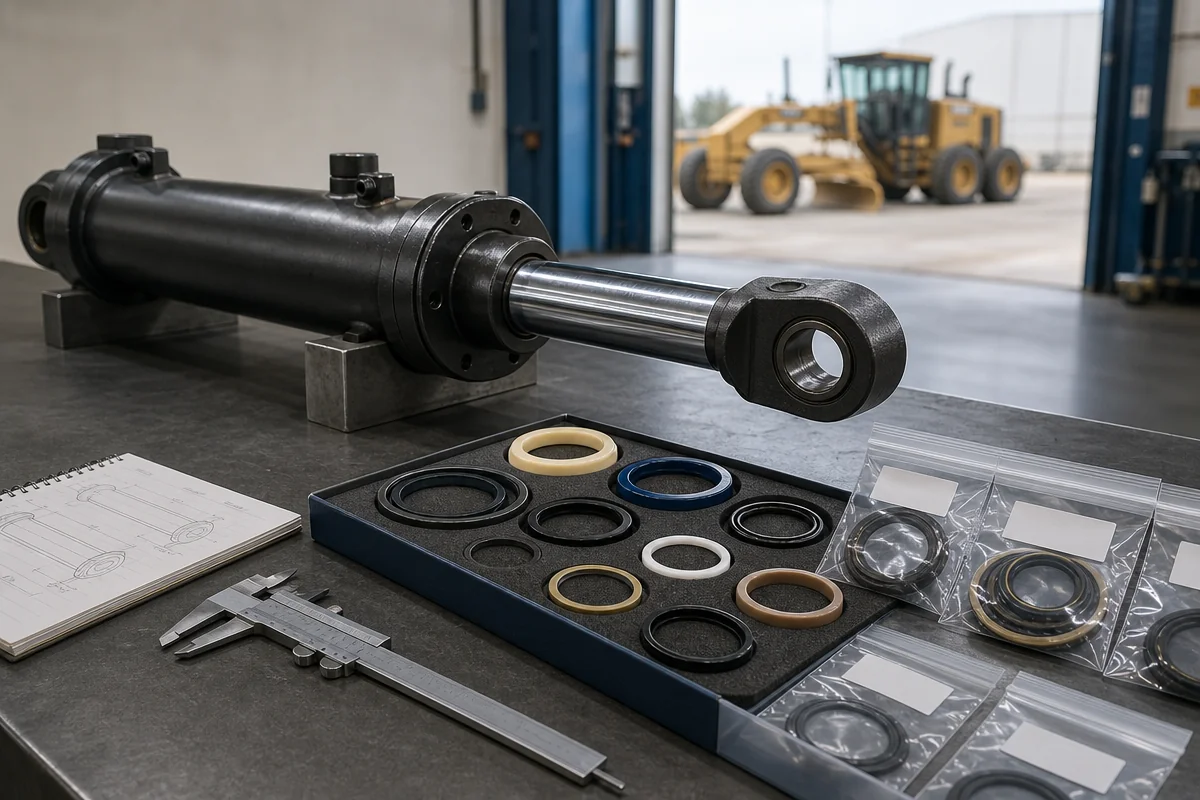 Motor Grader Hydraulic Cylinder Seal Kits: A B2B RFQ and Selection Guide