How to Import Hydraulic Seal Kits from China: A B2B Buyer’s Complete Guide
Importing hydraulic seal kits from China is a routine but high-stakes decision for B2B buyers. Done well, it can shorten your supply chain, widen your margin, and give your customers reliable kits for excavators, loaders, cranes, and other heavy machinery. Done carelessly, it can produce mismatched part numbers, inconsistent rubber compounds, delayed shipments, and warranty claims that erode the savings. This guide walks through the full process — supplier verification, RFQ preparation, sample validation, material checks, MOQ and packaging terms, documentation, and logistics — so you can import hydraulic seal kits from China with confidence and repeatable results.
Why Buyers Source Hydraulic Seal Kits from China
China’s seal industry is built around a dense ecosystem: raw material suppliers, rubber mixing plants, mold makers, vulcanization workshops, and finished-goods factories often sit within the same industrial region. That concentration is what makes China a practical option for buyers who want competitive pricing on bulk hydraulic seal kits without giving up access to a wide range of profiles, materials, and OEM-style part numbers.
For a hydraulic seal kit manufacturer China, the same core competence matters everywhere: choosing the right polyurethane, NBR, or FKM compound; machining the grooves correctly; and controlling flash and surface finish. When you deal directly with a factory, you can ask pointed questions about compound hardness, durometer, and testing procedures — and get answers from the people who actually make the parts. For distributors and repair shops, that transparency translates into fewer field failures and fewer “wrong kit” complaints from end customers.
That said, the reason most buyers choose to source hydraulic seals from China is cost-effectiveness at scale. Component costs, mold investment, and production setup are usually negotiable when you order in volume, but the real savings only materialize if the kit fits correctly on the first install. The rest of this guide is about protecting that advantage.
Factory vs. Trading Company: Verify Who You Are Really Dealing With
One of the most common traps for first-time importers is assuming that every “supplier” you talk to is a manufacturer. In the seal business, many sales channels are trading companies that buy from multiple factories and resell under their own brand. A well-run trading company can still be a good partner — they often consolidate products from several mills and handle export paperwork well. But when you need bulk hydraulic seal kits with stable quality, traceability, and direct technical support, knowing whether you are talking to a factory or a middleman changes how you negotiate and how you verify quality.
Ask for evidence, not just claims. A genuine hydraulic seal kit manufacturer China should be able to show you its production line on a video call, introduce its mixing and molding equipment, and explain its inspection process step by step. Cross-check the business license, export qualifications, and any quality certificates the company references. If a certificate is mentioned in marketing materials, ask to see a copy and verify the issuing body. For a structured way to check a supplier’s credibility before you commit, review our guide on vetting your hydraulic seal supplier: 5 key indicators.
| Checkpoint | Direct Factory | Trading Company |
|---|---|---|
| Pricing | Usually lower, no intermediary margin | Adds a margin, sometimes higher minimums to protect its own batch |
| Product knowledge | Deep, hands-on knowledge of compounds and tooling | Good on catalogs, weaker on production details |
| Quality traceability | Direct access to batch records and inspection data | Depends on which factory fills the order; batch records may be indirect |
| Flexibility | Can adjust compounds, packaging, or labeling for your market | Limited to what the supplying factory offers |
| Risk level | You verify one entity end to end | An extra link in the chain; verify the trader’s track record |
What to Prepare Before Sending Your First RFQ
The quality of your RFQ determines the quality of the quotes you receive. A vague inquiry — “please quote excavator seal kits” — will come back with vague answers. A precise RFQ gets precise pricing, and it also tells the supplier you know what you are doing, which tends to improve both service and negotiation leverage.
Put together the following information before you ask a China hydraulic seal kit supplier for a quotation:
- Machine details: brand, model, and year of the equipment the kit is for.
- OEM part number(s): the original part number printed on the box or the parts manual, plus any known superseding numbers.
- Photos: clear images of the original seals — the whole kit laid out, close-ups of each profile, and the box label if available.
- Measurements: bore diameter, rod diameter, groove dimensions, and cross-section for the critical seals, if you can measure them.
- Quantities: trial quantity, expected monthly volume, and whether you plan annual blanket orders.
- Material preferences: NBR, polyurethane, FKM, or “match the OEM” — say what you know.
- Target specification: hardness range, temperature range, or any standard you expect the kit to meet.
- Shipping terms: destination country, port or door address, and preferred incoterm.
- Timeline: when you need samples and when you need production finished.
Sending the same complete package to several suppliers makes quotes comparable. It also makes it easy to spot a supplier who answers thoughtfully versus one who quotes blindly.
Sample Validation: Never Skip This Step
Before you commit to bulk hydraulic seal kits, always request samples. A sample run is the cheapest insurance you can buy in this product category. Ask for samples of the actual part numbers you intend to order — not “similar” profiles — and check them against your original seals on three levels.
First, the dimensional fit. Measure the sample’s outside diameter, inside diameter, and cross-section, and compare them with the original part or your machine’s groove dimensions. A seal that is a millimeter off on a critical lip can leak under pressure even if it looks identical in a photo. Second, the material feel. Compare hardness, flexibility, and surface finish against the original. Polyurethane and NBR behave very differently in your hand, and a kit labeled “same as OEM” should feel consistent with what you are replacing. Third, the documentation. Ask which quality documents the supplier can actually provide — material test reports, dimensional inspection reports, and batch certificates are common in this category, but availability depends entirely on the supplier. Never assume a certificate exists just because a brochure mentions it.
Also test the sample in the field if you can. Install one kit on a real machine or bench, run it under working pressure, and record the result. This is the only way to validate performance claims before you scale up.
OEM Cross-Reference: Decoding Part Numbers Correctly
Most seal kits are ordered by OEM part number, and this is where mistakes happen most often. A single machine model can have different kits for different years, different boom configurations, or different cylinder manufacturers. The part number on your original box is the anchor point — but it is not always the whole story.
When you send an inquiry, include the OEM number together with the machine brand, model, and year. Ask the supplier to confirm the kit’s compatibility in writing, and compare the component list of the proposed kit against your original kit’s contents: rod wiper, rod seal, piston seal, backup rings, O-rings, and any special profiles. If the supplier’s cross-reference table maps your OEM number to a kit, ask which machine versions that reference covers. If you are sourcing kits for excavators specifically, reviewing how kits are structured for different models — such as the excavator hydraulic seal kit lineup — can help you frame better questions about compatibility.
Keep a running cross-reference sheet of your own. Every time you confirm a kit against an OEM number, record the machine model, year, kit reference, and supplier. Over a few orders, this sheet becomes your most valuable procurement asset.
Material and Configuration Verification
Seal kits are not interchangeable just because they share a part number prefix. The material spec determines service life, temperature tolerance, and chemical resistance, and the configuration — which profiles are included and how they stack in the gland — determines whether the kit installs cleanly.
Clarify the compound for each critical seal: NBR for general hydraulic oil service, polyurethane for high-wear rod applications, FKM for high-temperature or aggressive-fluid environments. Confirm the durometer (hardness) range the supplier intends to produce, and ask what the acceptable tolerance is. If the original kit used a specific backup ring arrangement, make sure the proposed kit matches it — a missing or extra backup ring changes pressure ratings.
If you are new to a particular machine family, a structured selection approach helps avoid guesswork; see our guide on choosing the right hydraulic seal kits for your excavator for the decision framework. In every case, put the agreed material and configuration in the purchase contract or at least in the written quotation, so both sides share the same reference point.
MOQ, Packaging, and Delivery Terms
Minimum order quantities vary significantly between suppliers, and there is no universal number. A factory’s MOQ reflects its production economics — batch size for rubber mixing, mold setup, and vulcanization cycles. Some suppliers accept small trial orders; others prefer to start with a larger first batch. Always ask the MOQ in writing, and ask whether a lower first-order quantity is possible while you validate the product. The answer will tell you a lot about the supplier’s flexibility and interest in a long-term relationship.
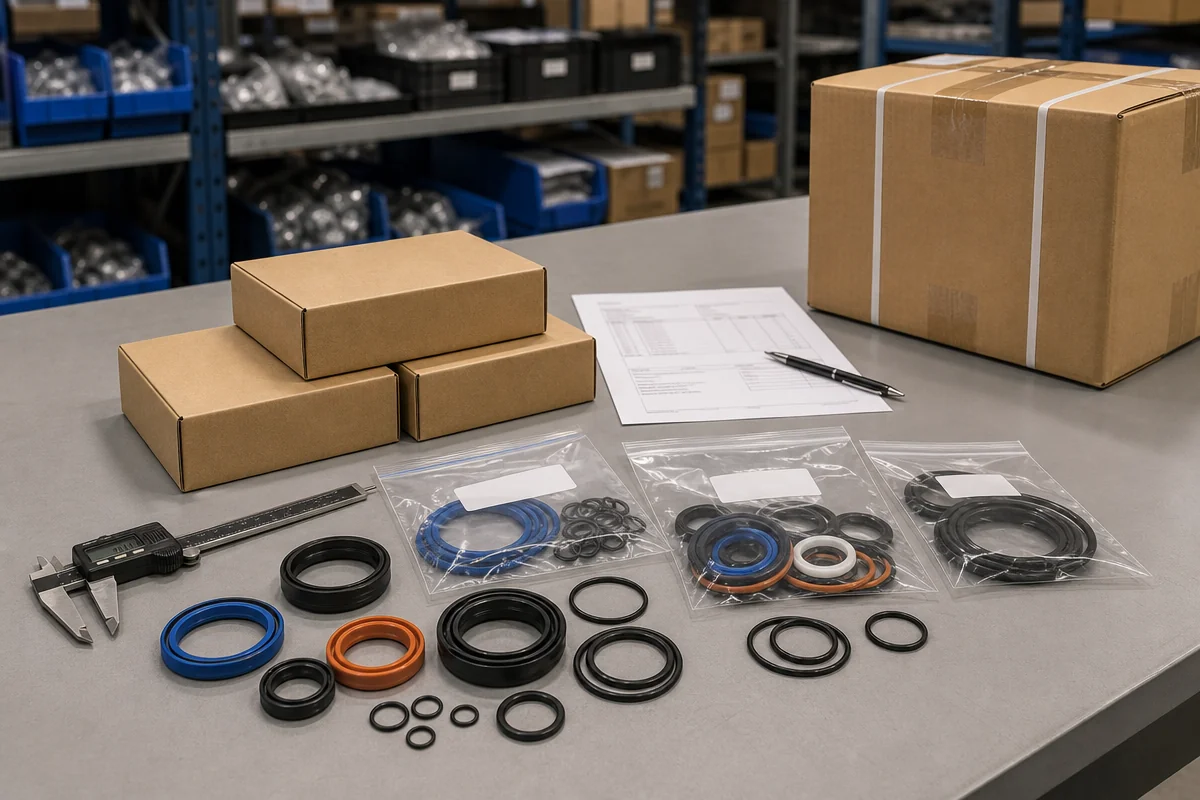
Packaging deserves its own conversation. Hydraulic seals are easily damaged by crushing, heat, and UV exposure, and a box that looks fine from the outside can hide deformed O-rings. Confirm how each kit will be packed — individual kits in sealed bags with labels, then cartons — and agree on labeling that matches your own SKU system if you plan to resell. Ask whether the supplier can add your part numbers or brand to the label. If you are distributing the kits, this detail saves you from re-labeling thousands of units yourself.
Lead times depend on the supplier’s current production schedule, material availability, and whether the items are stocked or made to order. Confirm the timeline in writing, and build buffer into your schedule — if you quote your own customers a delivery date, add margin on top of the supplier’s commitment. A written production schedule with milestone dates is more useful than a single vague promise.
Import Documents and Logistics
When you source hydraulic seals from China, the paperwork is as important as the product. Before payment, request a proforma invoice that lists unit prices, quantities, incoterm, and payment terms. After production, the export package should include the commercial invoice, packing list, and bill of lading or airway bill — plus any certificates you agreed on during sample validation.
Clarify the incoterm with your supplier. Under FOB, you arrange the ocean freight and inland transport at the destination; under CIF or CFR, the supplier covers freight to the destination port. Which option suits you depends on whether you have a forwarding relationship and how much control you want over the shipment. If you are importing in bulk, a freight forwarder at your end can consolidate the customs clearance, import duties, and local delivery, so ask your supplier for the cargo details (gross weight, volume, and HS code) early enough to get accurate freight quotes.
Also plan for inspection. A third-party pre-shipment inspection, or at minimum a documented photo check of the packed goods before loading, is standard practice for larger orders. Whether you use a third-party agency or a trusted agent, make the inspection criteria explicit: count per carton, labeling, packaging condition, and a sampling check against the approved sample.
Risk Comparison: Direct Sourcing vs. Using an Intermediary
Every sourcing route carries its own risk profile. The table below summarizes the main risks and the practical controls available to a B2B buyer.
| Risk | How It Shows Up | Practical Control |
|---|---|---|
| Wrong part number match | Kit does not fit; returned orders and idle machines | Send OEM number plus machine model and year; verify compatibility in writing |
| Inconsistent material quality | Early seal failure; leaking cylinders in service | Approved sample as the reference; request batch material test reports |
| Packaging damage in transit | Deformed O-rings and damaged lips on arrival | Agree on individual kit bags and carton protection; photo-check before loading |
| Customs and documentation delays | Shipment held at port; demurrage and missed deadlines | Confirm HS code and commercial documents in advance with your forwarder |
| Payment risk | Funds transferred before quality is confirmed | Start with sample orders; agree payment terms that match delivery milestones |
Common Mistakes Buyers Make When Importing Seal Kits
Most sourcing problems are preventable, and they repeat across buyers. The most common: ordering from the cheapest quote without verifying who the supplier is. A price that is dramatically lower than the market usually means a different compound, thinner material, or a “looks similar” profile — problems that surface only after the kit is installed. Second, skipping the sample stage for the sake of speed. Third, treating the OEM cross-reference as an exact science instead of verifying each machine version. Fourth, agreeing on packaging and labeling verbally and then receiving a container of mixed, unlabeled kits. Fifth, not writing down MOQ, lead time, and quality documents in the order confirmation — when a dispute happens, the order confirmation is your only evidence.
The pattern behind all of these is simple: assume everything will be confirmed in writing, and verify everything that matters before payment, not after delivery.
FAQ: Importing Hydraulic Seal Kits from China
What is the typical MOQ when I import hydraulic seal kits from China?
There is no universal MOQ — it depends on the supplier’s production setup, the kit’s complexity, and whether the items are stocked or made to order. Ask each supplier for their MOQ in writing, and ask whether a smaller trial order is possible before you commit to bulk quantities.
How can I verify a China hydraulic seal kit supplier without visiting the factory?
Start with a video call that includes a live walkthrough of the production area, review the business license and export documents, ask for references from other importers, and order samples before any large order. If the order is substantial, consider a third-party audit or pre-shipment inspection.
Can I combine different models in one order of bulk hydraulic seal kits?
Often yes, but confirm it in advance. Mixed orders affect the supplier’s production scheduling, packaging, and labeling. Agree on how each model will be separated, labeled, and counted in the packing list so you do not have to sort thousands of kits yourself.
What documents should I request before making a payment?
At minimum, a proforma invoice with unit prices, quantities, incoterm, and payment terms. Before shipment, the commercial invoice, packing list, and bill of lading or airway bill, plus any quality documents the supplier can genuinely provide — material test reports and inspection reports where applicable.
How long does shipping take, and who arranges it?
Shipping time depends on the route, the port pair, and the incoterm you agree on. Under FOB you arrange freight; under CIF or CFR the supplier arranges it to the destination port. Ask your supplier for gross weight, volume, and HS code early so your forwarder can quote accurately.
Start Your Sourcing Project
Importing hydraulic seal kits from China is a repeatable process: verify the supplier, send a complete RFQ, validate samples, agree on material and packaging, and document every term in writing. If you are sourcing seal kits for excavators, loaders, or other construction machinery — or if you already have OEM part numbers and photos from a machine teardown — send them to us and we will confirm compatibility, pricing, and delivery details against your requirements. Every parameter, from MOQ and lead time to available quality documents, is confirmed directly with you before any commitment is made. Your first inquiry costs nothing but a few minutes, and it will tell you whether the process fits the way you buy.
Note: MOQ, lead times, packaging options, and the availability of quality documents vary by supplier, product, and order specifics. All parameters should be confirmed directly with your chosen supplier before placing an order.
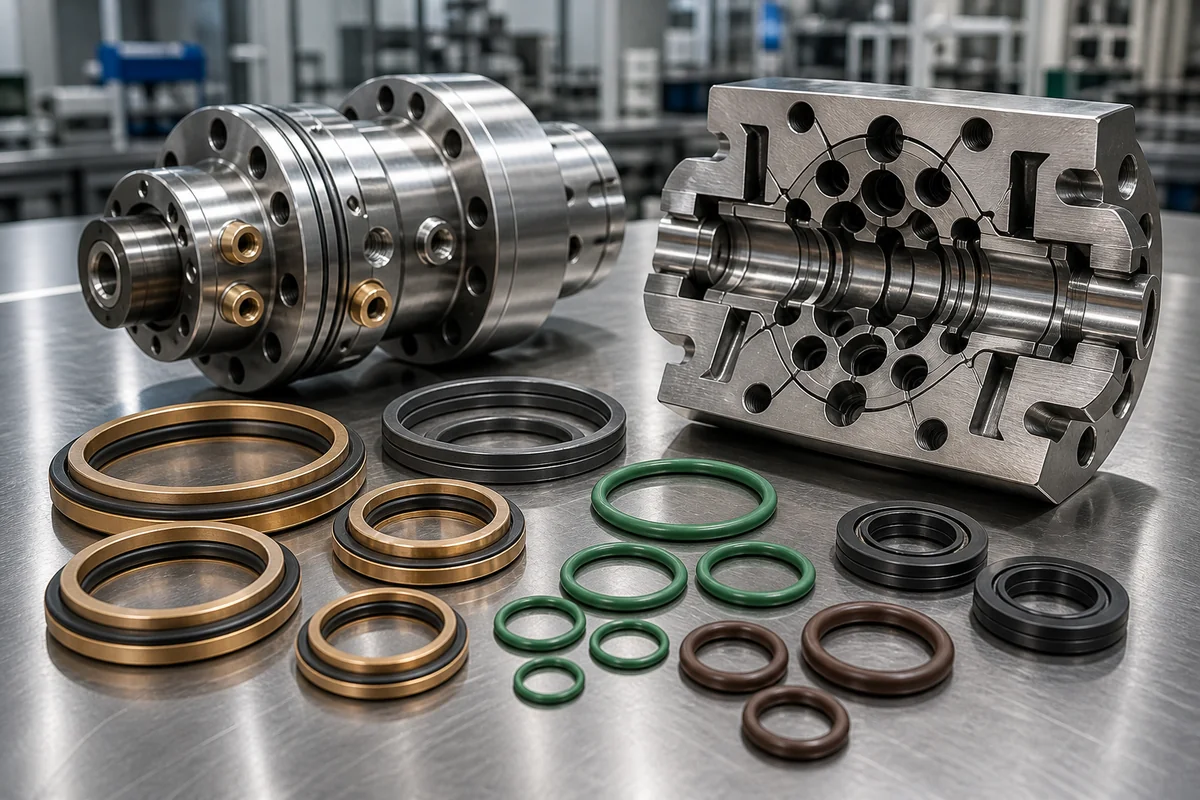 Excavator Center Joint (Swivel Joint) Seal Kits: Internal Cross-Port Leakage Troubleshooting, PTFE Step-Seal Selection & B2B Overhaul Guide
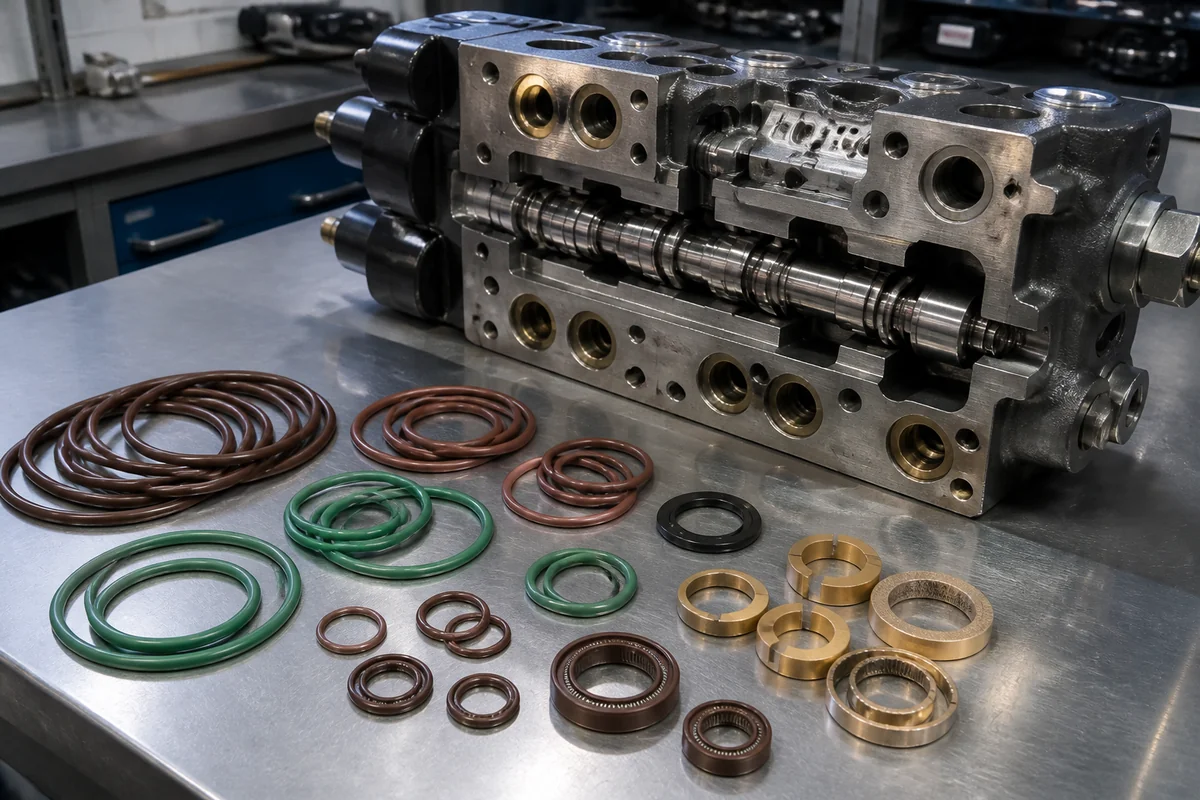 Excavator Main Control Valve Seal Kits: Spool Leakage Troubleshooting, Material Selection & B2B Sourcing Guide
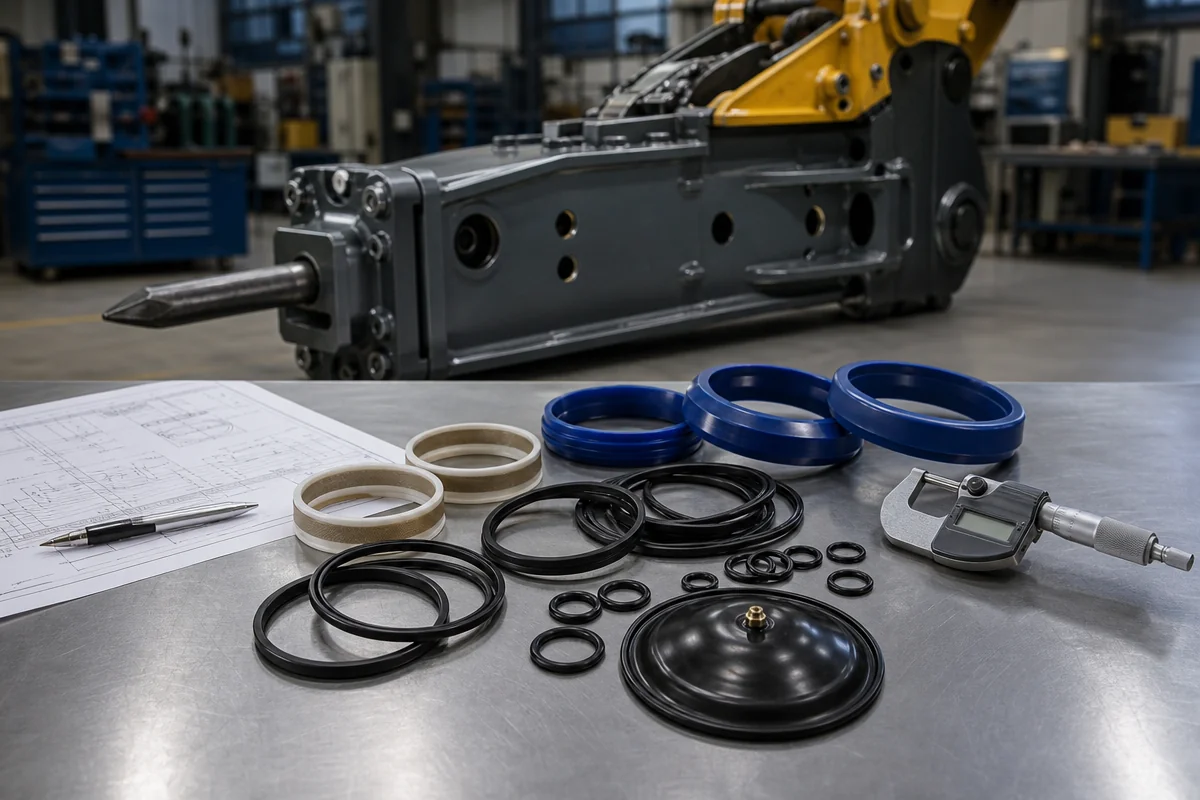 Hydraulic Breaker Hammer Seal Kits: B2B Sourcing, Material Selection, and High-Frequency Shock Protection Guide
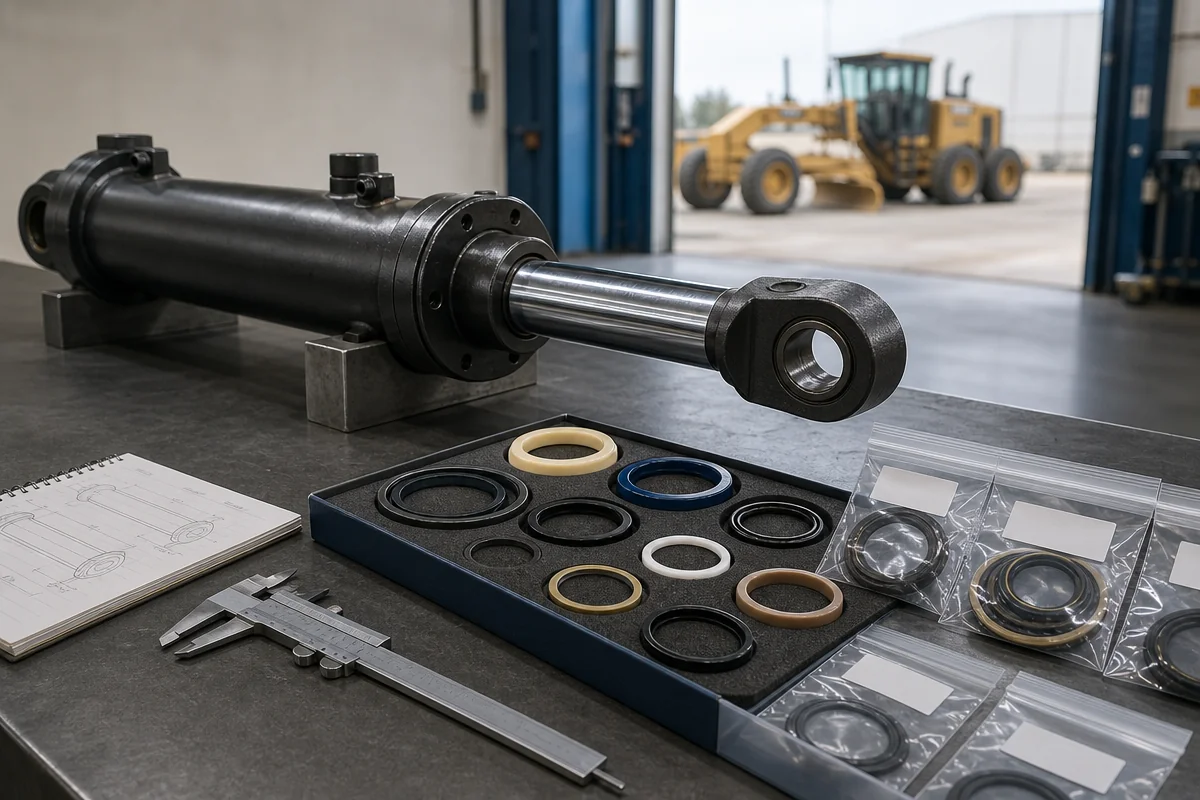 Motor Grader Hydraulic Cylinder Seal Kits: A B2B RFQ and Selection Guide