
Hydraulic Wiper Seal Selection: A B2B Guide to Contaminant Exclusion at the Rod End
A hydraulic cylinder fails from the outside in more often than from the inside out. The piston works in a sealed, oil-flooded chamber — the rod does not. Every stroke drags the rod through dust, mud, metal fines, wash water, and airborne grit before that same surface re-enters the cylinder. The hydraulic wiper seal, also sold as a hydraulic scraper seal or rod wiper seal, is the single component standing between the environment and the precision surfaces inside the cylinder. For distributors, repair shops, and fleet procurement teams, choosing the wrong wiper geometry at the rod end is not a small mistake: it converts a low-cost part into a repeat-failure driver that returns as warranty claims, downtime, and lost account trust.
This guide is written for B2B buyers rather than end users. It focuses on how to specify a rod wiper seal for a given contaminant profile, how to read lip geometry, how the wiper interacts with the rod seal behind it, and how to verify a sample and receive a batch without guessing. Where a dimension, material grade, temperature limit, or pressure rating matters, this guide does not invent numbers. It tells you what to confirm with the supplier or confirm from the drawing and application data, because those values are application-specific and any generic figure would be misleading.
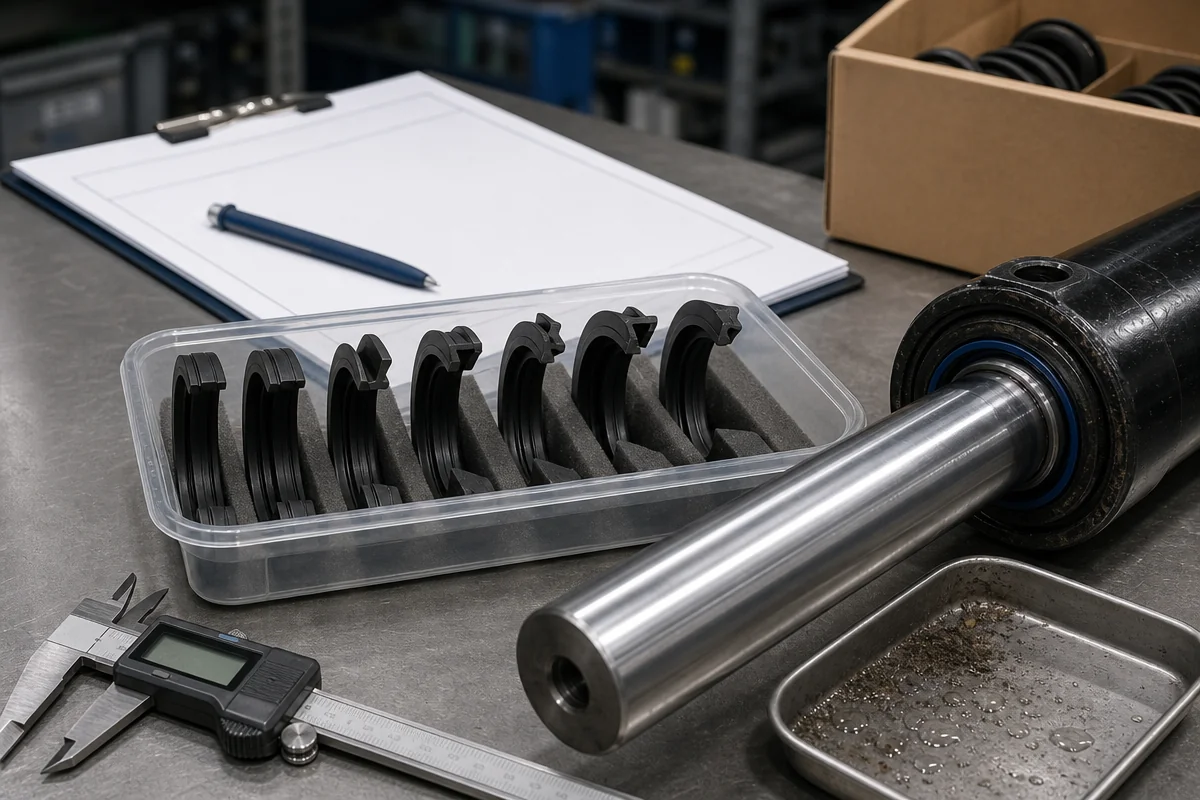
What the wiper seal actually has to do
Three jobs sit on one small ring:
- Exclude contaminants. The scraping lip removes or blocks dust, grit, chips, and moisture before they reach the rod seal. This is why the part is sometimes called a contaminant exclusion seal — exclusion, not sealing pressure, is the primary function.
- Retain a residual oil film. A wiper that wipes perfectly dry accelerates rod wear and starves the rod seal lip. Field practice generally favors a light film rather than a bone-dry rod, but the acceptable film level depends on the application and on the rod seal type behind it — confirm from application data rather than assuming.
- Survive the stroke and side load. Wiper lips see the highest relative velocity and the most abrasive contact of any seal in the cylinder. Geometry, housing retention, and material choice all have to tolerate the actual duty cycle, not a brochure duty cycle.
When a wiper is undersized for the environment, the failure is rarely dramatic at the wiper itself. Contaminant passes the lip, embeds in the rod seal, and the rod seal leaks. Teams then replace the rod seal without addressing the wiper, and the cycle repeats. That is the pattern documented in general discussions of hydraulic cylinder leakage: rod-end leakage is frequently a symptom whose cause sits upstream at the exterior of the gland.
Map the contaminant profile before you open a catalog
Wiper seal selection starts with the environment, not with the part number. Classify the dominant contaminant and the secondary one, because a design that excels against dry dust can behave very differently in a wet, slurry-loaded or high-pressure wash-down setting.
| Operating environment | Dominant contaminant | Wiper geometry to evaluate | Rod-end considerations | Data to confirm with the supplier |
|---|---|---|---|---|
| Indoor machinery, clean oil-mist air | Fine dust, light film | Single scraping lip with a defined edge | Retention groove in the gland; moderate lip preload | Median and minimum lip interference; allowed rod finish |
| Construction, quarry, demolition | Abrasive grit, stone dust | Dual-lip or stepped dual-lip scraper | Protected rod, no exposed scoring; hardened rod preferred | Abrasion-oriented compound option and its durometer |
| Wet, slurry, wash-down, marine | Water carry-over, fine silt | Dual-lip design with a secondary wiping edge | Drain or relief path at the gland; corrosion-resistant rod | Compound compatibility with the fluid and with wash media |
| Metal-forming or machining cells | Metal chips, swarf, tramp coolant | Heavy-duty scraper with a robust, thick lip section | Physical guarding where possible; consider chip deflector | Chip-cut resistance; whether a metal-cased variant is offered |
| High-cycle mobile equipment | Mixed dust plus heat | Geometry trading scraping efficiency against lip friction | Velocity and duty cycle reviewed against lip preload | Temperature range of the compound and expected lip life data |
Two disciplines make this table useful. First, name the primary contaminant in the RFQ; “dusty” and “wet and dusty” are different specifications. Second, note whether the cylinder breathes or is vented, because air exchange can pull contaminant past a gland that looks visually sealed.
Single lip, dual lip, chamfered, vented: the selection logic
Lip architecture is where most mis-selection happens. The following comparison is a decision framework, not a set of universal recommendations — the correct choice always depends on the application data you confirm with the supplier.
| Lip / body design | How it works | Favored when | Watch-outs |
|---|---|---|---|
| Single scraping lip | One edge scrapes the rod on the retract stroke | Clean to lightly contaminated duty; low friction priority | Limited reserve once the single edge wears or nicks |
| Dual lip (two staged edges) | First edge removes bulk contaminant, second completes exclusion | Dusty, gritty, or wet-and-gritty environments | Higher friction and heat; housing depth must suit the profile |
| Chamfered / angled lip face | Angled lead-in guides contaminant outward and limits lip roll | Rod ends exposed to impact, spray, or heavy chip load | Chamfer must not sit where it reduces effective scraping contact |
| Vented / breathing gland arrangement | Relieves trapped pressure or air between wiper and rod seal | Cylinders that see rapid cycling or trapped-media buildup | The relief path must not itself become a contaminant entry route |
| Metal-cased / reinforced body | Rigid casing holds the lip square under side load | High side load, poor gland support, chip-heavy cells | Different installation method; verify bore and retention details |
Two rules of thumb help buyers frame the question for a supplier. First, count the contaminant stages you need: one edge handles light, uniform contamination; two staged edges handle mixed or high-load contamination where the first edge is expected to give up material over time. Second, treat friction as a constraint, not a footnote. A more aggressive scraper geometry raises drag and lip temperature, which can shorten both wiper and rod seal life.
Rod surface condition is part of the specification
No wiper can compensate for a rod that is already damaged. The rod surface is a mating component, and its condition should be treated as an input to wiper seal selection rather than an afterthought.
- Finish and roughness. Lip contact depends on a rod finish suited to the seal; too rough wears the lip, too smooth can reduce the oil film the wiper relies on. Confirm the acceptable roughness range from the supplier’s data for the specific profile.
- Hardness and coating. Hard chrome or other hardened surfaces resist scoring far better than an untreated rod. Confirm the rod specification from the cylinder drawing and application data, not from assumption.
- Straightness and runout. Eccentricity or side load concentrates lip pressure on one arc of the wiper and creates a leak path on the opposite side.
- Scoring and corrosion. Existing scratches, pitting, and spalling give contaminant a direct channel past the lip. If the rod is scored, replacing the wiper alone will not restore exclusion.
- Assembly damage. Nicks introduced during gland assembly are a common and avoidable cause of early wiper leakage. Threads and rod ends should be protected during installation.
For teams replacing seals in the field, the practical step is to measure the rod and record its condition at the same time as the seal dimensions. Our guide on how to measure hydraulic seals covers the measurement discipline that pairs with this inspection.
Pair the wiper with the rod seal behind it
The rod wiper seal and the rod seal are a system, not two independent line items. Poor pairing shows up as either a dry rod and premature rod seal wear, or as a wiper that passes contaminant straight into an unprotected rod seal.
- Match performance tiers. A heavy-duty scraper placed in front of an entry-level rod seal creates a mismatch in expected service life. Specify both parts against the same duty profile.
- Respect the rod seal’s sensitivity. Different rod seal geometries and compounds tolerate different film thicknesses and different contaminant exposures. Ask the supplier to confirm that the wiper and rod seal combination is suitable for the same fluid and the same rod finish.
- Consider the space between them. Trapped contaminant between wiper and rod seal causes progressive damage. Where the gland design permits, a relief or drain path reduces accumulation.
- Keep the fluid in mind. Fluid chemistry affects compound compatibility for both parts. Confirm compatibility from supplier data for the actual operating fluid.
When the wiper and rod seal are specified as a pair, keep the failure history together too. Documenting which combinations failed, and in which contaminant environment, is what turns a parts list into a purchasing strategy. Our reference on hydraulic cylinder seal failure prevention and on kit traceability and batch control covers how to structure that record so a repeat failure is traceable to a batch rather than to a rumor.
Sample verification before you commit a purchase order
For distributors and repair shops adding a wiper profile to a catalog, sample verification is the cheapest insurance available. A structured sample evaluation answers four questions:
- Dimensional agreement. Do the sample’s inner diameter, outer diameter, height, and lip geometry match the drawing within the agreed tolerance? Confirm the tolerance basis with the supplier — do not assume it.
- Fit and retention. Does the part seat in a reference gland without rolling or being crushed, and does it stay seated through manual stroke simulation?
- Lip uniformity. Inspect the scraping edge for chatter marks, molding flash, nicks, or an uneven contact line. A wavy lip edge is a leak path.
- Documentation. Confirm what the supplier can provide: material designation, drawing or dimension sheet, batch marking, and any test or inspection report they offer. Ask specifically which documents accompany a production shipment, not only a sample.
A practical check: install the sample wiper on a scrap or test rod with the actual rod finish, run a manual stroke cycle, and inspect the contact band. An even, continuous band indicates the lip is engaging correctly; a broken or skewed band suggests a geometry, concentricity, or rod condition problem that will not fix itself in production.
RFQ fields that prevent wrong-part shipments
Incomplete RFQs are the root cause of most wiper seal returns. Include the following fields so the supplier can quote accurately the first time:
- Part function: rod wiper seal / hydraulic scraper seal, and whether a paired rod seal is also required.
- Dimensions from the drawing: inner diameter, outer diameter, overall height, and housing depth — all with the tolerance basis.
- Rod diameter and rod surface specification, including finish and any coating.
- Housing type and retention method: open groove, closed groove, or metal-cased.
- Contaminant profile: primary and secondary contaminant, wet or dry, and any wash-down or chemical exposure.
- Operating fluid and confirm-on-application operating temperature range.
- Duty cycle, stroke velocity, and side-load presence.
- Quantity per shipment, packaging requirements, and whether batch marking or a certificate of conformity is required.
- Sample requirement and expected lead time for the sample, stated separately from production lead time.
- Any drawing, photo, or used-part sample you can supply for cross-reference.
Never quote a pressure, temperature, or material grade into an RFQ that you cannot trace to a drawing or to application data. It is better to write “confirm with supplier” on the RFQ than to anchor a specification to a number nobody can verify.
Receiving inspection and quarantine discipline
Incoming inspection is where a purchasing team protects the maintenance team. Wiper seals are small, low-cost, and easy to accept without looking — which is exactly why defects reach the field. Use a simple three-tier judgment: release to stock, hold for clarification, or quarantine.
| Incoming observation | Status | Action |
|---|---|---|
| Dimensions and lip geometry match the approved sample and drawing | Release | Log batch, mark part number, move to stock |
| Clean lip, uniform contact edge, no flash or nicks; labeling correct | Release | Retain one part as a reference sample for the cycle |
| Dimension outside the agreed tolerance, or lip edge wavy, nicked, or skived | Quarantine | Segregate, tag with batch and defect, raise supplier claim before use |
| Material, compound, or casing differs from the approved sample | Quarantine | Do not install; request written clarification and corrected batch |
| Batch marking missing, mixed, or inconsistent with the packing list | Hold | Confirm with supplier before releasing; keep segregated meanwhile |
| Damaged packaging, visible deformation, or contaminated parts in the bag | Hold | Reject the affected quantity on arrival; document evidence for the supplier |
| Several failed installations with the same part and rod, no dimensional fault found | Hold | Reopen the application review: rod condition, geometry fit, pairing |
Quarantine works only if segregated stock is physically separated and clearly tagged. A “quarantine” shelf that sits next to the service bench becomes a picking location the first time a mechanic is under time pressure. Label with part number, batch, defect, and date; keep rejected lots off the pick path entirely.
Procurement checklist for rod wiper seal purchasing
- Contaminant profile documented: primary contaminant, secondary contaminant, wet or dry.
- Rod diameter, finish, and coating specified from the drawing and application data.
- Wiper geometry selected against that profile — single or dual lip, chamfered, vented, or cased.
- Paired rod seal identified and specified to the same duty tier.
- Housing groove type, depth, and retention method confirmed before ordering.
- Full dimensional data and tolerance basis requested with the quotation.
- Operating fluid and temperature range confirmed with the supplier for the proposed compound.
- Sample approved against a reference gland and rod before a production order.
- Batch marking, packaging, and certification requirements stated in the RFQ.
- Receiving inspection criteria written down and assigned to a named person.
- Failure feedback loop in place: part, batch, machine, environment, outcome.
FAQ: hydraulic wiper seal selection
What is the difference between a wiper and a scraper seal? The terms are largely interchangeable in the market. Both describe the rod-end exclusion element. Some suppliers use “scraper” for a heavier, more aggressive geometry and “wiper” for a lighter profile, but the naming convention varies — confirm which profile a specific part number represents before comparing across suppliers.
Can I replace a wiper seal with any part that fits the groove? Fit is necessary but not sufficient. Lip geometry, edge condition, compound, and the paired rod seal all affect exclusion performance. A dimensionally correct part with the wrong lip architecture can pass contaminant just as effectively as a missing wiper.
How do I know which lip design suits my application? Start from the contaminant environment, the rod condition, and the duty cycle, then confirm the recommended geometry with the supplier using the actual application data. There is no single lip design that is correct for every environment.
Should the wiper be replaced at the same time as the rod seal? In most repair practice, yes. The two parts work as a pair, and the wiper is usually the lower-cost item. Replacing one without the other often reproduces the original failure mode.
How much oil film should remain on the rod after the wiper? A light film is generally expected, but the acceptable level depends on the rod seal type and fluid. Confirm the expectation from the supplier’s application guidance rather than assuming the rod should be dry.
How long should a wiper seal last? Service life depends on rod finish, velocity, contaminant load, temperature, and installation quality. Rather than accepting a blanket figure, ask the supplier what data they can provide for your duty profile, and track actual life in your own fleet.
Next step: spec the wiper with a supplier who will show the data
If you are buying a rod wiper seal for a dusty, wet, or abrasive application, the fastest way to reduce repeat failures is to send a complete RFQ with the contaminant profile, rod condition, dimensions, and paired rod seal requirement. DJF Seal works with distributors, repair workshops, and fleet procurement teams to review wiper geometry, lip design, and pairing against the actual application, and to supply samples and batch data for verification before a production order.
Send your wiper seal drawing, rod specification, and operating environment and ask for a profile recommendation, a sample for fit verification, and the documentation available for production batches.
Request a hydraulic wiper seal quotation and sample — include your rod diameter, housing groove type, contaminant environment, and whether a paired rod seal is required. Quotations are prepared against your drawing and application data, with any specification that cannot be confirmed from those inputs clearly flagged as “confirm with supplier”.
 Excavator Center Joint (Swivel Joint) Seal Kits: Internal Cross-Port Leakage Troubleshooting, PTFE Step-Seal Selection & B2B Overhaul Guide
 Excavator Main Control Valve Seal Kits: Spool Leakage Troubleshooting, Material Selection & B2B Sourcing Guide
 Hydraulic Breaker Hammer Seal Kits: B2B Sourcing, Material Selection, and High-Frequency Shock Protection Guide
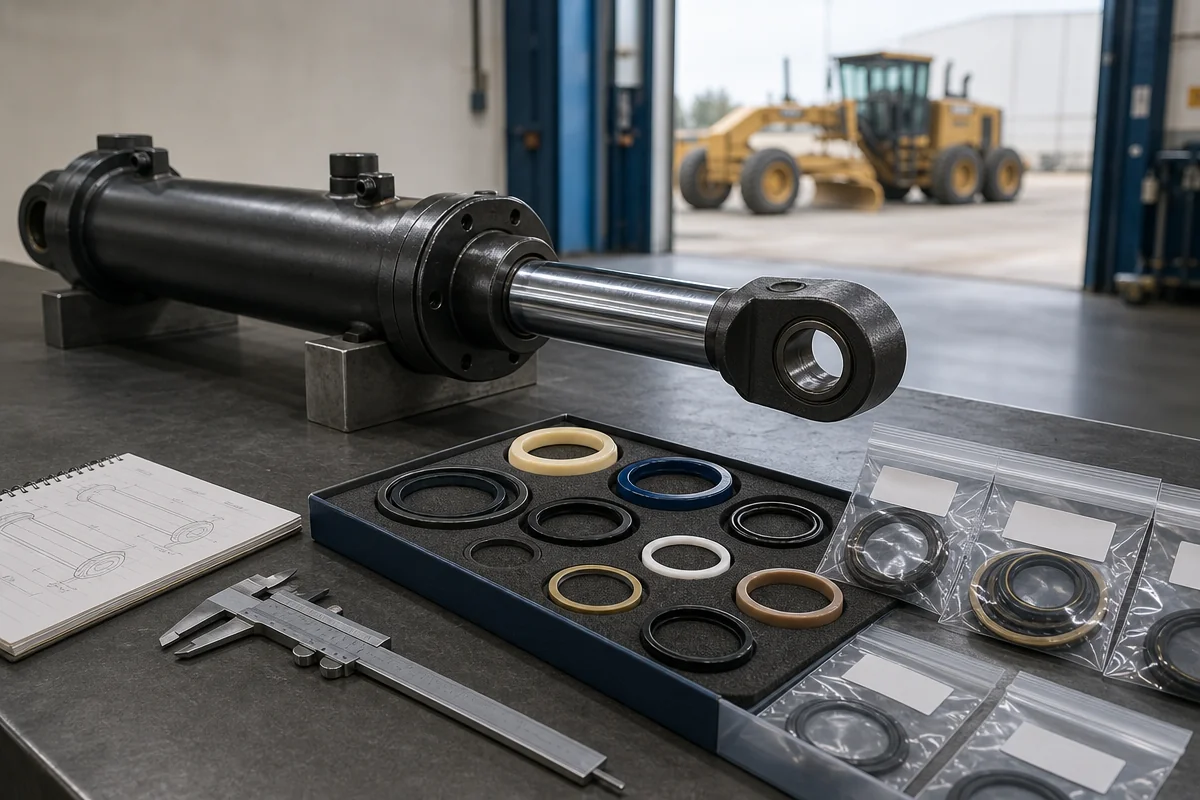 Motor Grader Hydraulic Cylinder Seal Kits: A B2B RFQ and Selection Guide