
Loader Hydraulic Seal Kits: The Complete Guide for Wheel Loader & Skid Steer Cylinder Maintenance
Why Loader Hydraulic Seals Deserve Their Own Conversation
When a wheel loader sits idle on a construction site with oil dripping from its lift cylinder, every minute of downtime chips away at the project’s bottom line. According to a 2026 heavy equipment maintenance report from FleetRabbit, the average cost per hydraulic system failure runs close to $95,000 when you factor in parts, labor, and lost productivity.
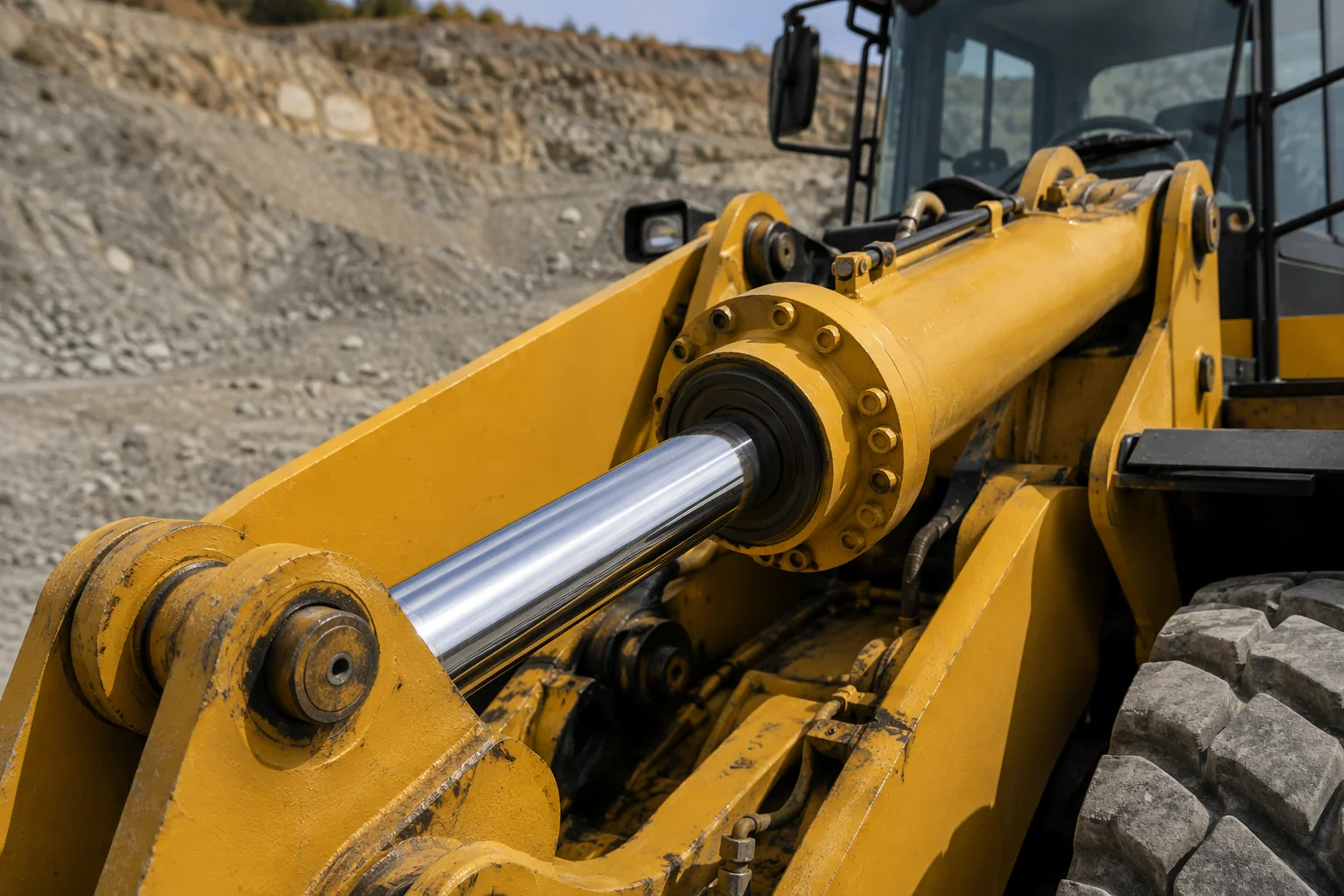
Yet loaders are often treated as an afterthought in the hydraulic seal conversation. Most online resources and supplier catalogs focus heavily on excavator seal kits, while loaders — despite accounting for a massive share of the global construction equipment fleet — receive comparatively little dedicated content.
A loader does fundamentally different work than an excavator: sustained load-holding under vibration, larger cylinder bores for equivalent tonnage class, and heavy contamination exposure from dusty quarry and aggregate environments. These factors directly influence seal selection — particularly the choice between single-acting and double-acting piston seal profiles, the need for robust buffer seals, and the use of heavy-duty wiper seals.
Types of Hydraulic Cylinders in Loaders and Their Seal Requirements
Lift Cylinders (Boom Cylinders)
These are the largest cylinders on any wheel loader — raising and lowering the entire loader arm assembly, often holding several tons of material at heights exceeding 15 feet. The seals must withstand sustained static pressure during load transport, handle shock loads when the bucket hits pile material, and resist creep. Polyurethane (PU) piston seals with integrated backup rings are the industry standard for aftermarket lift cylinder kits.
Bucket Cylinders (Tilt Cylinders)
Bucket cylinders control the bucket angle and cycle more frequently than lift cylinders. The rod seal experiences the most dynamic wear. U-cup profile rod seals in polyurethane are preferred for their tight dynamic sealing with controlled friction and excellent abrasion resistance at high cycle rates.
Steering Cylinders
Articulated steering cylinders on wheel loaders operate at moderate pressure but experience constant small-amplitude movements that cause a specific wear pattern called fretting in the rod seal area. PTFE-based step seals with O-ring energizers perform best here because they maintain consistent contact pressure even during slow, small movements.
Stabilizer Cylinders (Backhoe Loaders)
Located close to the ground and highly exposed to dirt and moisture, stabilizer cylinders on backhoe loaders demand heavy-duty double-lip wiper seals in polyurethane. Once contamination enters the cylinder, it grinds against both the rod seal and the rod surface, accelerating wear across the entire sealing system.
Major Loader Brands and Seal Kit Compatibility
Caterpillar Wheel Loaders
Cat loaders — from the compact 906 to the massive 994 — dominate global market share. Common models include the 950, 966, 980, and 988 series. Quality aftermarket Cat loader seal kits now match OEM specifications in material grade and dimensional tolerance, typically at 40-60% of the OEM price. A technical note: post-2010 Cat loaders increasingly use metric-sized seals even in markets where imperial measurements dominate — always verify dimensions from the cylinder itself.
Komatsu Wheel Loaders
Komatsu’s WA series — the WA380, WA470, WA500, and larger — are workhorses in infrastructure projects across Asia, Africa, and Latin America. Steering cylinder seal kits for WA-series loaders are a particularly common replacement item. Aftermarket suppliers serving developing markets should stock Komatsu loader kits aggressively given their deep penetration in Southeast Asia, the Middle East, and Africa.
Volvo Wheel Loaders
Volvo loaders (L60 through L350) have a strong presence in European and North American markets. Volvo’s hydraulic systems run at slightly higher operating pressures than comparable Cat models, so PU seals with Shore hardness of 93-95A are typically specified. Volvo uses VOE part numbers for seal kits, which can be cross-referenced by aftermarket suppliers.
John Deere and Case Loaders
John Deere’s 544 and 644 wheel loaders and Case’s 521 and 621 series are common in agricultural and light construction segments. Seal kits for these machines must handle potential exposure to agricultural chemicals and fertilizers — environments where NBR seals can degrade faster than PU or FKM alternatives.
Skid Steer Loaders: Bobcat, John Deere, New Holland, Case
Skid steer seal kits are smaller and more standardized than wheel loader kits. Bobcat dominates the market globally, with aftermarket seal kits for S-series and T-series models widely available at $25-$80 per cylinder. Availability for pre-2010 models can be spotty — a key reason for distributors to carry broad inventory.
| Factor | Loader Cylinders | Excavator Cylinders |
|---|---|---|
| Primary load type | Sustained static load during transport | Cyclical high-pressure bursts |
| Cylinder orientation | Lift cylinders vertical, exposed rod | Multi-angle, rod protected by boom |
| Contamination exposure | High — quarries, farms, loading docks | Moderate — digging face, trenches |
| Typical bore sizes | Larger (4″-10″ for mid-size) | Smaller per tonnage class |
| Operating pressure | 3,000-5,000 psi | 4,000-5,500+ psi |
| Wiper seal importance | Critical — dirty environment | Important but less exposed |
Warning Signs Your Loader Cylinder Seals Need Replacement
- Light Oil Weeping Around the Rod — The earliest sign. A thin oil film on the extended rod with a drip ring below the cylinder head. The rod seal has begun to wear but has not yet failed completely.
- Cylinder Drift — The bucket slowly lowers over several minutes when parked with no control input. The piston seal is bypassing internally — dangerous and needs immediate replacement.
- Slow or Jerky Movement — Sluggish lift/tilt function or stuttering bucket motion indicates air ingress through a failing rod seal or internal leakage disrupting fluid flow.
- Visible Rod or Wiper Damage — A scored, pitted, or rusted piston rod will destroy a new seal within hours. Address rod damage before replacing seals.
- Overheating Around the Cylinder — One cylinder noticeably hotter than others during operation indicates severe piston seal wear generating excess heat through fluid friction.
Material Selection for Loader Seal Kits
Polyurethane (PU / TPU) — The workhorse material. Excellent abrasion resistance, high tensile strength, good extrusion resistance. Handles dynamic bucket cycling and static lift-holding equally well. Standard PU softens above 100°C — use high-temperature PU grades for hot climates.
Nitrile Rubber (NBR) — Cost-effective for O-rings, backup rings, and static positions. Good low-temperature flexibility to -30°C, but lower abrasion resistance limits its suitability for dynamic rod seal applications in high-cycle loader operations.
PTFE (Polytetrafluoroethylene) — Premium choice for demanding applications. Handles -200°C to +260°C, lowest friction coefficient, resists virtually all hydraulic fluids. Higher cost and requires precise groove machining. Specified for high-end OEM kits or rebuilds where extended service intervals are non-negotiable.
FKM (Viton) — Used in specialized loader applications involving high-temperature fluids, fire-resistant fluids, or chemical exposure — such as slag-handling loaders in steel mills.
Practical recommendation: For general-purpose loader seal kits, a PU/NBR combination provides the best performance-to-cost ratio. PU for rod seals, piston seals, and wipers; NBR for O-rings and static backup rings.
How B2B Buyers Should Source Loader Seal Kits
- Does the supplier provide dimensional verification? A reputable supplier should confirm bore diameter, rod diameter, and seal groove dimensions for every kit. A seal 0.5mm off will leak regardless of the label.
- Are the seal materials clearly identified? Packaging must specify PU, NBR, PTFE, or FKM. If the supplier cannot tell you what material is in the kit, find another supplier.
- What is the MOQ and lead time? A supplier that allows mixed-brand orders and small-batch stocking (5-10 kits per SKU) lets you test market demand without overcommitting working capital.
- Does the supplier offer OEM cross-referencing? A quality supplier maintains a database mapping their part numbers to OEM part numbers for Cat, Komatsu, Volvo, John Deere, and Case — making procurement faster and reducing ordering errors.
- Can the supplier handle custom seal kit requests? A manufacturer with in-house seal production can assemble custom kits based on sample seals or dimension drawings — a significant advantage over distributors who only resell pre-packaged kits.
Maintenance Practices That Extend Loader Seal Life
Keep rod surfaces clean. Wipe down exposed rods at the start of each shift. Retract all cylinders when the loader is parked overnight to protect rods from dust, rain, and accidental impact.
Replace hydraulic oil and filters on schedule. Maintain ISO 4406 cleanliness code at 18/16/13 or better. A quality hydraulic filter changed at recommended intervals is the cheapest seal life insurance available.
Address minor leaks immediately. A weeping rod seal will not heal itself. The longer a leak persists, the more contamination enters the system as the cylinder retracts, increasing the risk of scoring the rod or barrel.
Use correct installation tools. Proper seal installation tools — seal twisters for U-cup seals, stepped installation sleeves for piston seals, and plastic or brass picks for O-ring placement — pay for themselves many times over by eliminating installation-related failures.
The Bottom Line
Loader hydraulic seal kits are not a commodity item to be sourced on price alone. The right kit — with correct materials, accurate dimensions, and proper wiper protection — keeps a loader producing instead of parked. For B2B buyers, the key is finding a seal kit supplier who understands the specific demands of loader applications and can deliver consistent quality at wholesale volumes.
At DJF Seals, we manufacture loader seal kits for all major brands — Caterpillar, Komatsu, Volvo, John Deere, Case, JCB, and more — using high-grade polyurethane and nitrile materials matched to each cylinder’s operating requirements. Our kits include heavy-duty double-lip wipers as standard on lift and bucket cylinders, and we provide dimensional verification with every order. Whether you need standard kits from our 5,000+ SKU catalog or custom kits for unique cylinder configurations, we ship from our factory in Guangzhou to distributors, repair shops, and fleet operators worldwide.
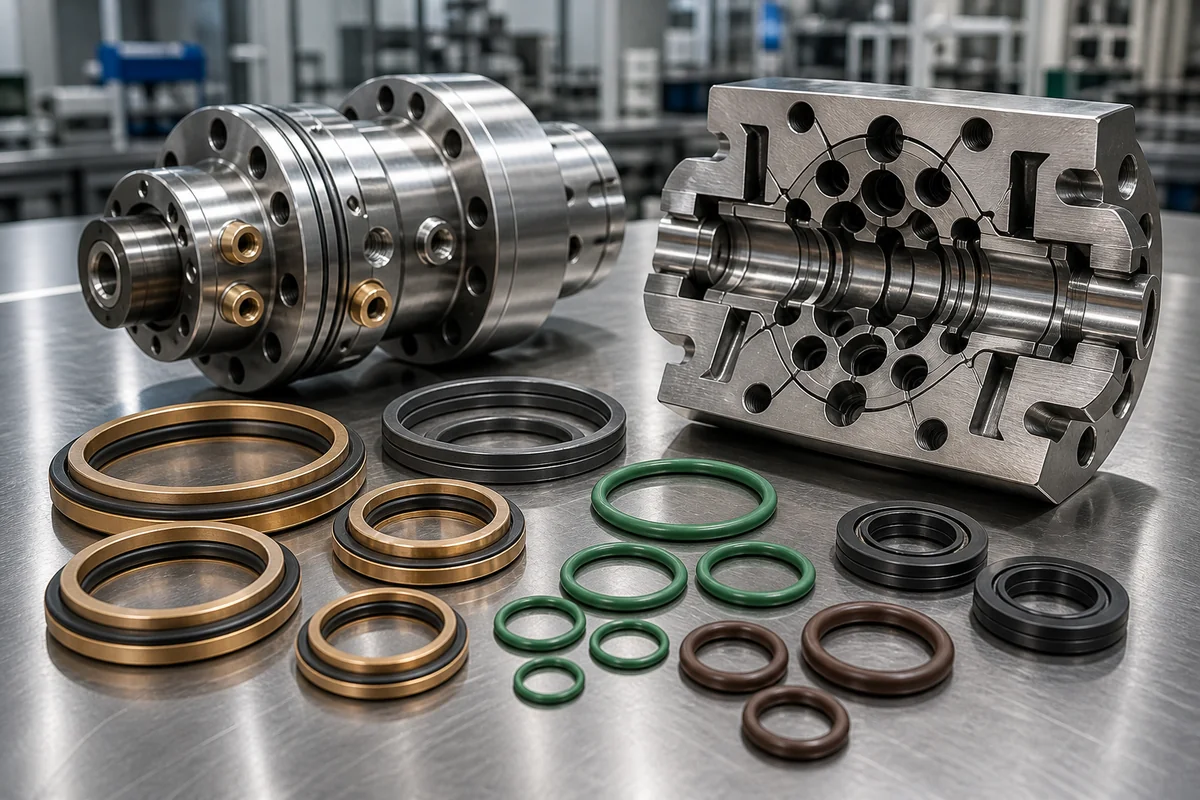 Excavator Center Joint (Swivel Joint) Seal Kits: Internal Cross-Port Leakage Troubleshooting, PTFE Step-Seal Selection & B2B Overhaul Guide
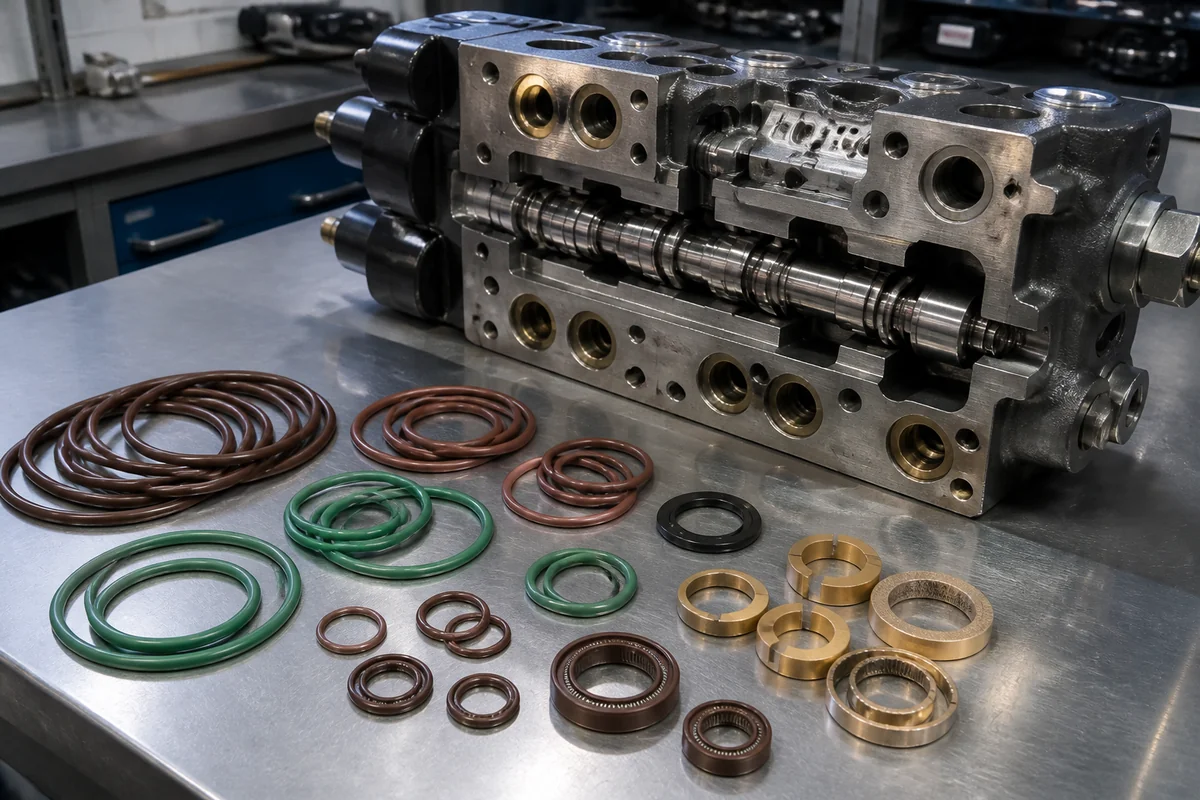 Excavator Main Control Valve Seal Kits: Spool Leakage Troubleshooting, Material Selection & B2B Sourcing Guide
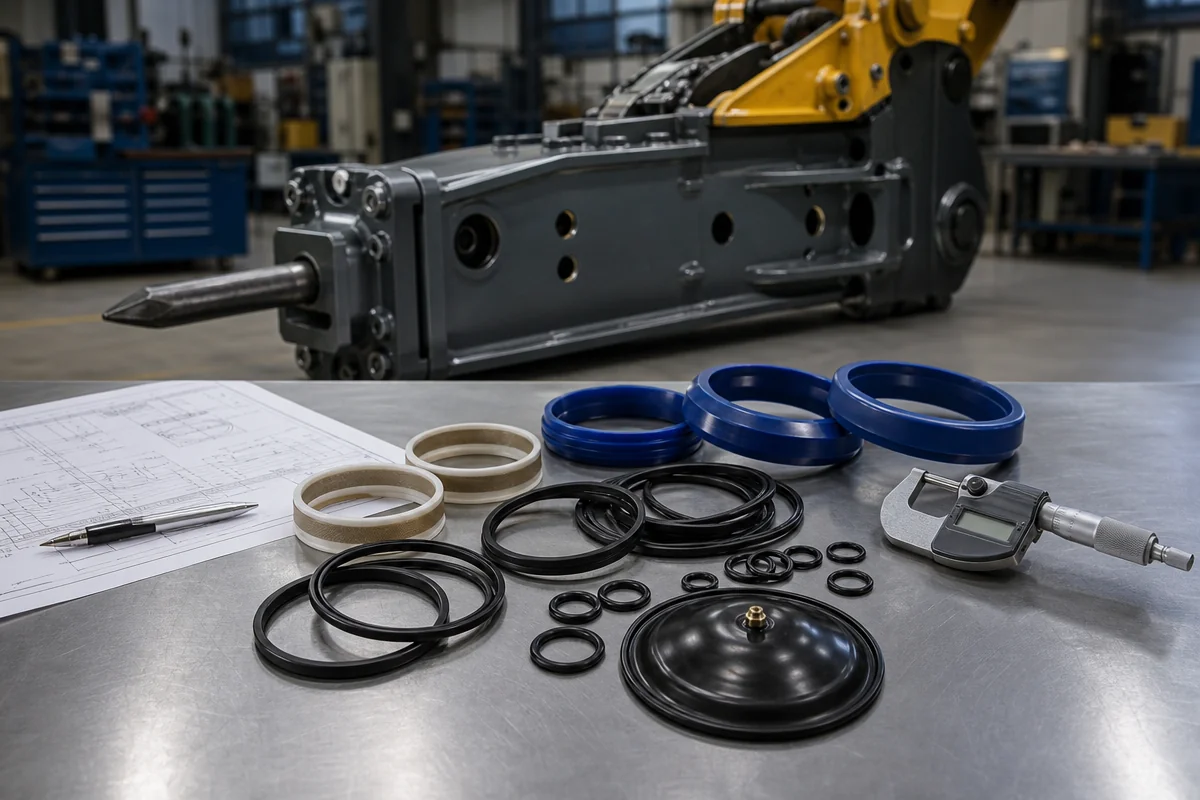 Hydraulic Breaker Hammer Seal Kits: B2B Sourcing, Material Selection, and High-Frequency Shock Protection Guide
 Motor Grader Hydraulic Cylinder Seal Kits: A B2B RFQ and Selection Guide