
Top 5 Materials for Hydraulic Seals: Why Material Choice Matters for Excavator Performance
For B2B buyers, wholesalers, and repair shops dealing with excavator hydraulic seal kits, understanding the materials used in these critical components is paramount. The performance, durability, and longevity of a hydraulic seal are directly tied to its material properties, which must withstand extreme pressures, temperatures, and chemical environments. At DJF Seal, we leverage our expertise as a leading hydraulic seal kits factory to select and process the optimal materials, ensuring our products deliver superior performance. Here, we delve into the top 5 materials commonly used for hydraulic seals and why their choice significantly impacts excavator performance.
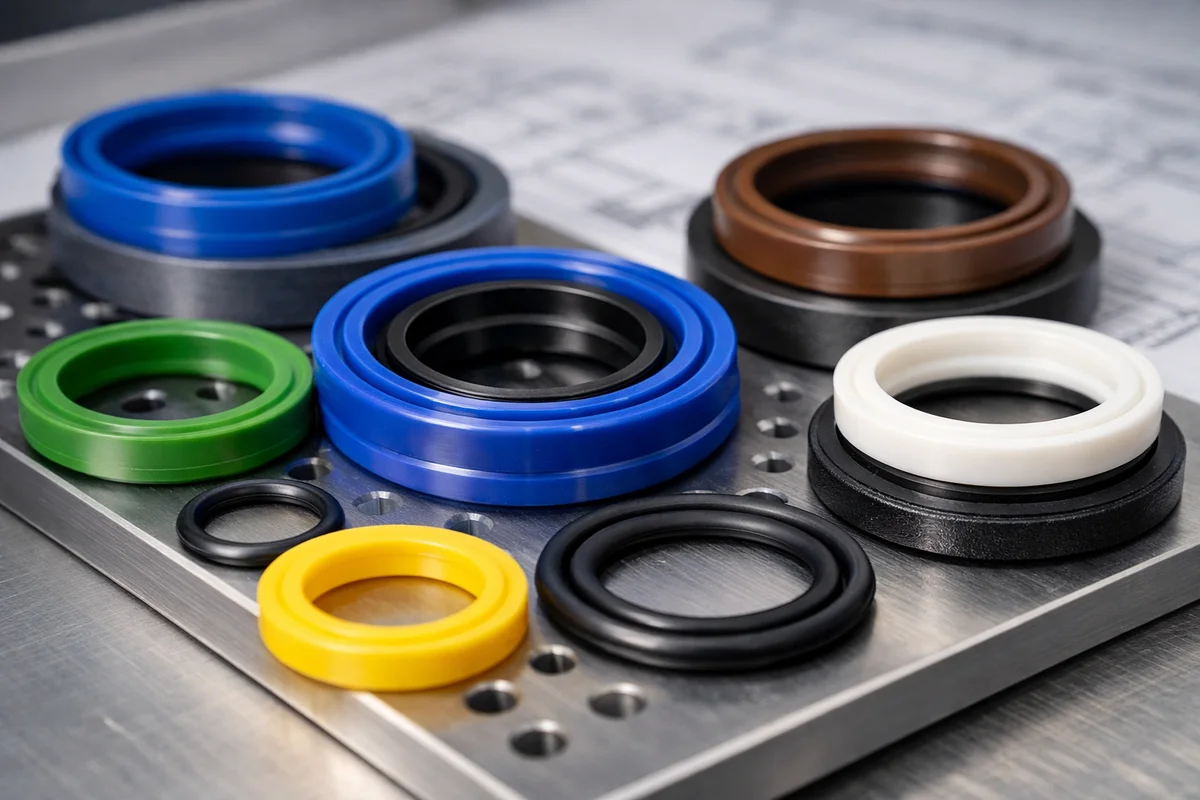
The Critical Role of Seal Materials
Hydraulic systems in excavators operate under demanding conditions. Seals prevent fluid leakage, maintain pressure, and protect internal components from contamination. The wrong material choice can lead to premature seal failure, costly downtime, and reduced operational efficiency. Therefore, selecting a material that matches the specific application’s requirements (e.g., fluid type, temperature range, pressure, speed, and chemical compatibility) is crucial.
Top 5 Materials for Hydraulic Seals
| Material | Common Abbreviation | Key Properties | Typical Applications in Excavators |
|---|---|---|---|
| Polyurethane | PU | Excellent abrasion resistance, high tensile strength, good elasticity, wide temperature range (-40°C to +100°C) | Rod seals, piston seals, wipers, heavy-duty applications |
| Nitrile Butadiene Rubber | NBR | Good oil resistance, wear resistance, and elasticity, cost-effective, moderate temperature range (-30°C to +100°C) | O-rings, static seals, general-purpose hydraulic seals |
| Fluorocarbon Rubber | FKM (Viton®) | Excellent high-temperature resistance (up to +200°C), superior chemical resistance to aggressive fluids, good weather resistance | High-temperature applications, chemical-resistant seals, engine seals |
| Polytetrafluoroethylene | PTFE | Very low friction, excellent chemical resistance, wide temperature range (-200°C to +260°C), high pressure resistance, often used with O-rings | Guide rings, backup rings, piston seals (especially for high-speed/low-friction) |
| Hydrogenated Nitrile Butadiene Rubber | HNBR | Enhanced temperature resistance (up to +150°C) and chemical resistance compared to NBR, excellent abrasion resistance | High-performance NBR alternative, automotive, industrial hydraulic systems |
1. Polyurethane (PU)
Polyurethane is arguably the most popular material for dynamic hydraulic seals due especially to its exceptional abrasion resistance and high tensile strength. It offers excellent elasticity and resilience, making it ideal for rod and piston seals that experience significant movement and friction. DJF Seal often utilizes advanced PU compounds to ensure long-lasting performance in demanding excavator environments.
2. Nitrile Butadiene Rubber (NBR)
NBR is a versatile and cost-effective material known for its good resistance to petroleum-based oils and fuels. It’s widely used for O-rings and static seals. While its temperature range is moderate, its balance of properties makes it a staple in many hydraulic applications. DJF Seal ensures high-quality NBR compounds for reliable general-purpose sealing.
3. Fluorocarbon Rubber (FKM / Viton®)
When high temperatures and aggressive hydraulic fluids are a concern, FKM (Viton®) is the material of choice. It offers superior chemical resistance and can withstand temperatures up to +200°C. This makes it indispensable for critical applications where other materials would quickly degrade.
4. Polytetrafluoroethylene (PTFE)
PTFE is renowned for its incredibly low friction coefficient and excellent chemical inertness. It can operate across an extremely wide temperature range and handle high pressures. Due to its rigidity, PTFE seals are often used in conjunction with O-rings to provide elasticity, making them perfect for guide rings, backup rings, and high-speed piston seals.
5. Hydrogenated Nitrile Butadiene Rubber (HNBR)
HNBR is an upgraded version of NBR, offering improved temperature resistance (up to +150°C) and enhanced chemical resistance, particularly to sour gas and ozone. It also boasts excellent abrasion resistance, making it a robust choice for more demanding applications where NBR might fall short.
DJF Seal’s Commitment to Material Excellence
At DJF Seal, our commitment to quality extends to the meticulous selection and processing of these materials. We understand that a superior seal kit begins with superior raw materials. Our hydraulic seals and seal kits, for instance, are engineered from high-performance compounds to ensure optimal compatibility and longevity in various excavator models (Caterpillar, Komatsu, Hitachi, Volvo, Sany).
By choosing DJF Seal, B2B partners are not just getting a product; they are getting a solution backed by deep material science expertise, ensuring that every hydraulic seal kit performs reliably under the toughest conditions.
Ready to source hydraulic seal kits with the right materials for peak excavator performance? Visit the DJF Seal contact page to explore our material options and request a wholesale quote. Let DJF Seal be your trusted partner for durable and high-performance sealing solutions.
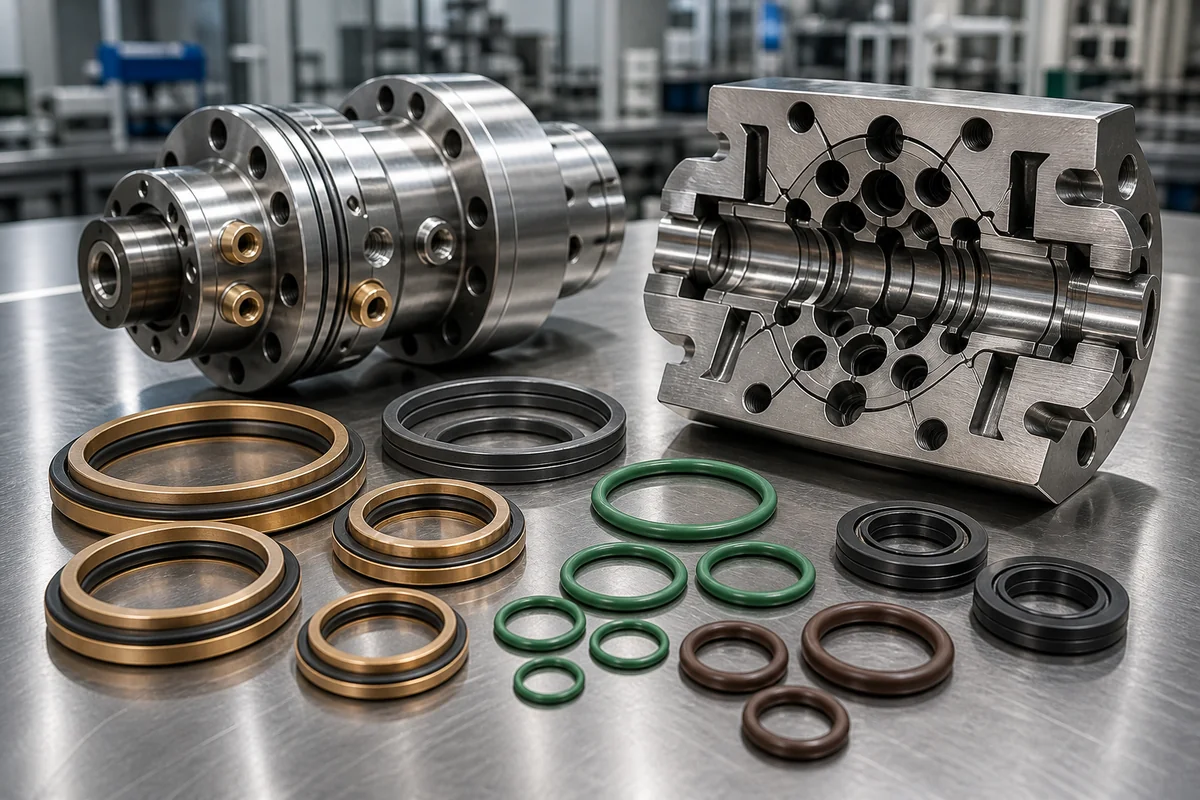 Excavator Center Joint (Swivel Joint) Seal Kits: Internal Cross-Port Leakage Troubleshooting, PTFE Step-Seal Selection & B2B Overhaul Guide
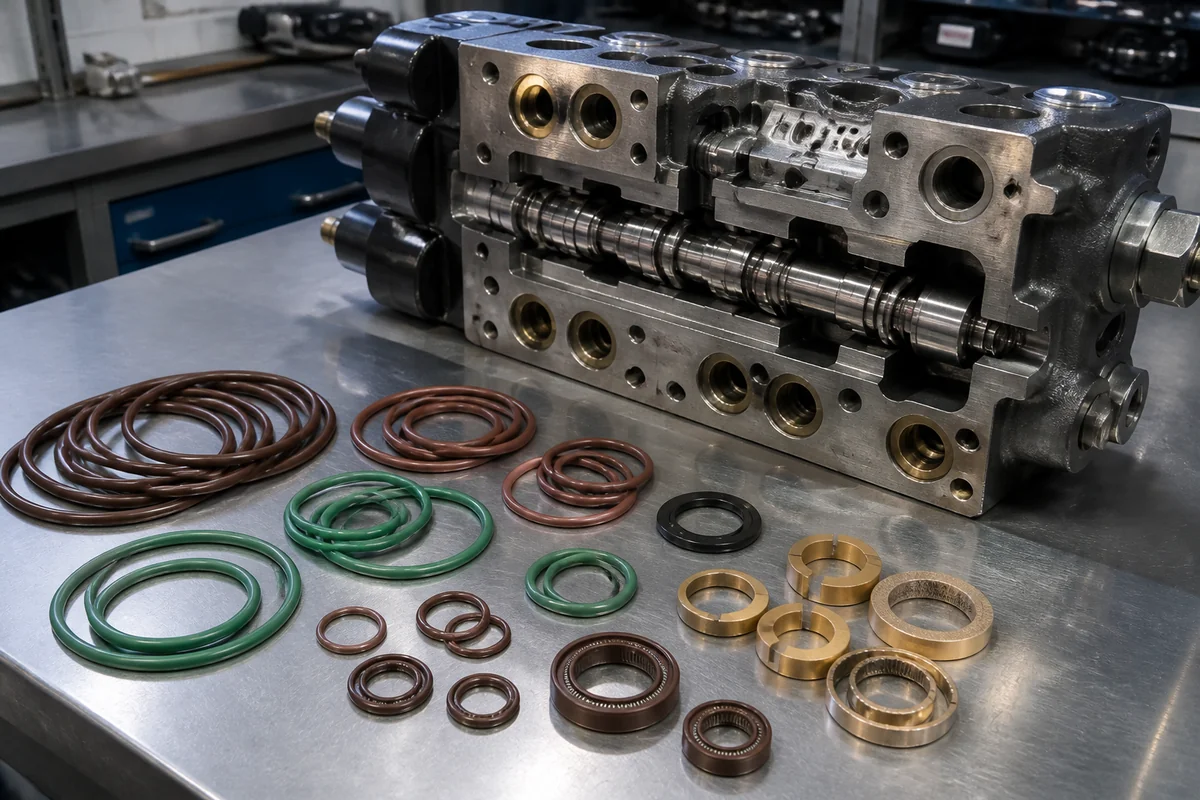 Excavator Main Control Valve Seal Kits: Spool Leakage Troubleshooting, Material Selection & B2B Sourcing Guide
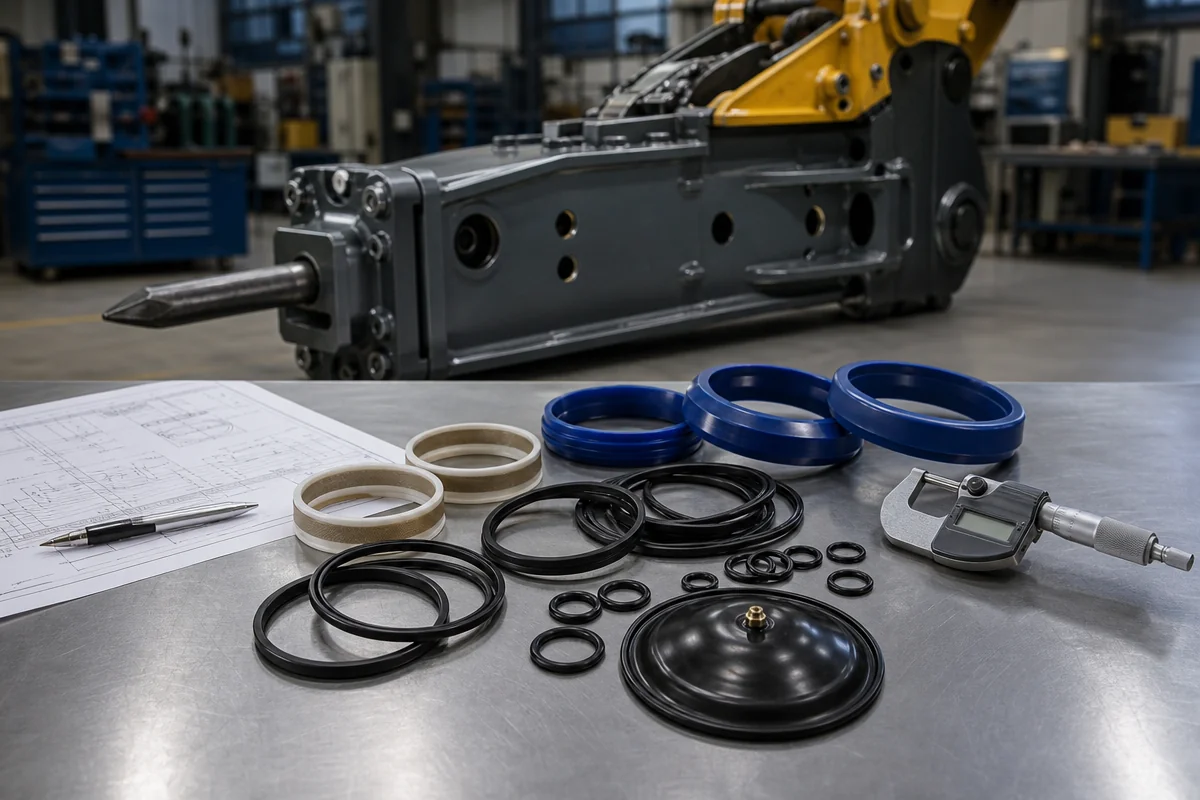 Hydraulic Breaker Hammer Seal Kits: B2B Sourcing, Material Selection, and High-Frequency Shock Protection Guide
 Motor Grader Hydraulic Cylinder Seal Kits: A B2B RFQ and Selection Guide