Because the center joint is deeply embedded within the center axle of the undercarriage, disassembling it requires extensive workshop labor, often involving track drive disconnection, hydraulic line labeling, and heavy-duty crane rigging. When internal seals fail, the machine exhibits frustrating symptoms such as track steering drift (machine pulling to one side), sudden loss of two-speed travel torque, or hydraulic fluid contamination entering the travel gearbox. For heavy equipment rebuilders, quarry maintenance managers, and B2B parts distributors, investing in high-integrity excavator center joint seal kits is the only proven method to ensure leak-free multi-channel isolation and prevent catastrophic downtime.
1. Engineering Anatomy & Sealing Architecture of Hydraulic Center Joints
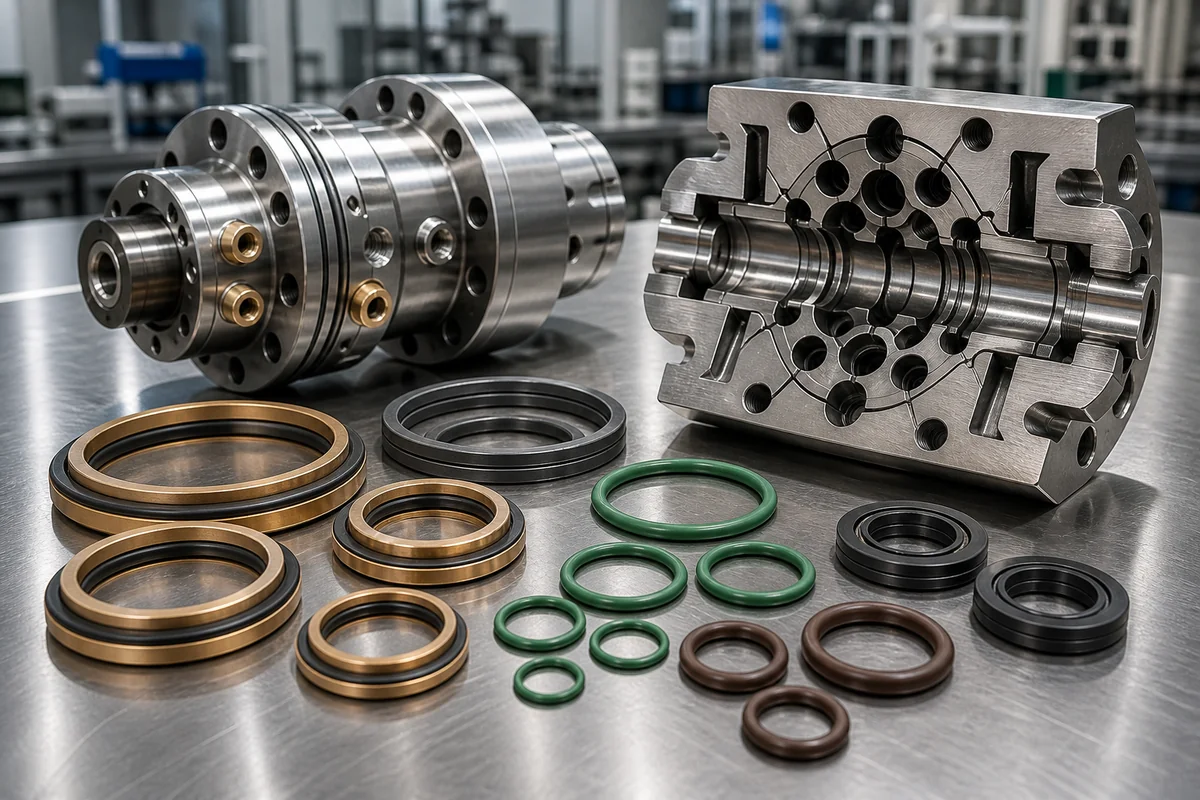
A heavy excavator center joint consists of two primary precision-machined elements: an inner stationary spindle (stem or core shaft) containing drilled axial and radial fluid galleries, and an outer rotating casing (housing or barrel) ported to the lower track motor supply lines. Maintaining pressure containment between rotating metallic boundaries requires a multi-tier rotary sealing architecture:
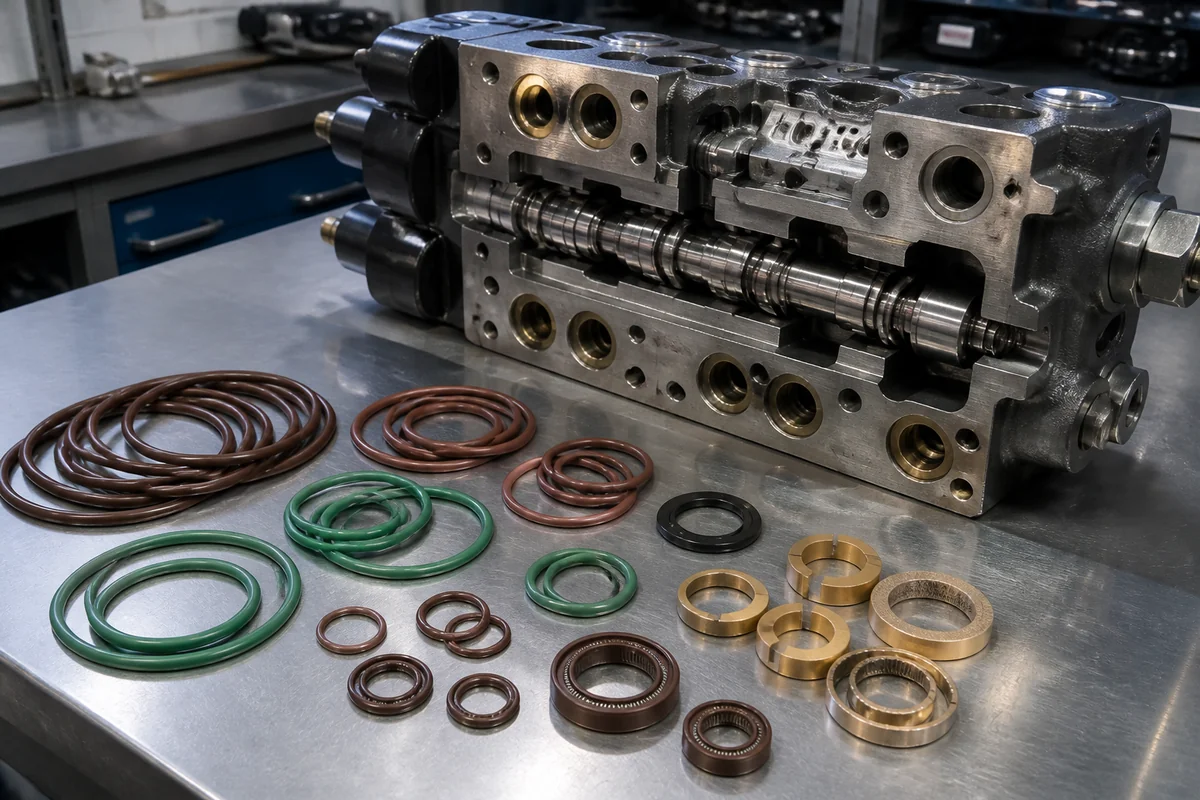
- Inter-Port Rotary Step Seals (Glyd Rings / Step Seals): Located in precision-machined circumferential grooves along the inner stem, these composite seals consist of a bronze-filled or carbon-filled PTFE cap ring energized by an elastomeric O-ring. They provide dynamic rotary sealing between adjacent oil channels (e.g., separating Left Travel Forward from Left Travel Reverse).
- High-Pressure Fluorocarbon (FKM) & Hydrogenated Nitrile (HNBR) Energizer O-Rings: Seated behind the PTFE slipper ring, these resilient elastomeric elements maintain continuous radial contact pressure even during cold starts, thermal expansion, and system pressure fluctuations.
- High-Load PTFE / Phenolic Wear Rings & Guide Strips: Positioned at the upper and lower spindle journals to absorb side loads, prevent metal-to-metal galling between the stem and body, and maintain concentricity under harsh slewing loads.
- Upper & Lower Rotary Dust / Oil Seals: Heavy-duty double-lip NBR or FKM rotary shaft seals with stainless steel garter springs designed to retain low-pressure return oil while blocking abrasive mining slurry, dust, and water intrusion from the undercarriage.
- End Cap Static O-Rings and Anti-Extrusion Backup Rings: Sealing the top distribution flange and bottom cover plate against pulsation pressure spikes up to 400 bar.
2. Troubleshooting Center Joint Failures: Symptoms, Mechanisms & Diagnostics
Diagnosing whether a travel fault originates from the main pump, main control valve (MCV), travel motor counterbalance valve, or the center joint requires systematic pressure decay testing. The table below outlines the primary failure modes specific to excavator center joint seal degradation:
| Operational Failure Symptom | Hydrodynamic Root Cause | Damaged Component in Swivel Joint | Overhaul Remediation Protocol |
|---|---|---|---|
| Track Steering Deviation (Machine Veers Off Course) | High-pressure oil from one travel motor circuit bypasses across worn rotary step seals into the low-pressure drain passage, causing asymmetric drive motor flow. | Inter-Channel Dynamic PTFE Step Seals & Energizer O-Rings | Replace all rotary step seals with 40% bronze-filled PTFE seals + 90 Shore A FKM energizers; hone spindle lands. |
| Loss of High-Speed Travel Shift (Stuck in Low Gear) | Pilot travel speed shift line (2-speed displacement signal) loses pressure through a degraded channel seal, failing to shift motor swashplate. | Pilot Travel Shift Channel Seal Ring | Install precision-machined step seals with low-friction PTFE compounds; verify pilot signal pressure (>3.5 MPa). |
| External Hydraulic Leakage Under Carbody Center | Compression set and thermal hardening of upper/lower rotary shaft seals; dust lip worn by abrasive quarry grit. | Upper/Lower Rotary Shaft Oil Seals & Dust Wipers | Replace with heavy-duty FKM double-lip skeleton oil seals; polish spindle journal surface to Ra < 0.2 μm. |
| Blade / Outrigger Cylinder Spontaneous Drift | Cross-port leakage between dozer blade raise and lower channels in wheeled/crawler excavators equipped with front auxiliary blades. | Auxiliary Port Isolation Step Seals | Complete multi-channel resealing with virgin compound kits; perform nitrogen pressure decay verification. |
| Excessive Hydraulic Fluid Temperature Rise (>90°C) | Continuous fluid throttling across extruded or nibbled rotary seal gaps creating laminar friction heat. | Full Internal Step-Seal Matrix | Full teardown and rebuild; replace hydraulic oil and flush undercarriage piping to ISO 4406 18/16/13. |
3. Material Science for Rotary Hydraulic Seals: PTFE vs Polymers
Unlike reciprocating hydraulic cylinder rod or piston seals, center joint rotary seals operate under continuous angular sliding contact. Standard polyurethane (PU) or plain nitrile (NBR) seals experience rapid frictional overheating and stick-slip degradation. Choosing high-specification modified polymers is mandatory:
| Rotary Seal Material Compound | Hardness / Shore | Max Dynamic Speed | Continuous Temp Range | Engineering Strengths in Center Joints |
|---|---|---|---|---|
| Bronze-Filled PTFE (PTFE + 40% Bronze) | 62 ± 5 Shore D | 2.0 m/s | -55°C to +225°C | Exceptional thermal conductivity, superior wear resistance against cast iron bores, zero stick-slip during slow slewing. |
| Carbon/Graphite-Filled PTFE (PTFE + 25% Carbon) | 65 ± 5 Shore D | 2.5 m/s | -50°C to +250°C | Self-lubricating, optimal for soft steel or re-honed center joint housings; prevents bore scoring under dry startup. |
| Fluoroelastomer (FKM / Viton®) Energizers | 85 – 90 Shore A | Static / Energizing | -20°C to +200°C | Zero compression set at elevated hydraulic temperatures; maintains continuous radial pre-load against PTFE face rings. |
| Reinforced Fabric Phenolic Resin (Guide Bands) | 95 ± 5 Rockwell M | 1.0 m/s | -40°C to +130°C | High compressive load bearing capacity (>270 MPa); dampens severe side-thrust vibrations during heavy digging. |
| Standard Nitrile (NBR 70/80 – Obsolete for MCV/Swivel) | 75 ± 5 Shore A | 0.5 m/s | -30°C to +100°C | Prone to thermal hardening, extrusion, and rapid grooving; restricted only to low-pressure external dust wiper rings. |
4. OEM Cross-Reference & Channel Specifications Across Global Excavator Brands
Center joints vary widely in spindle diameter, port spacing, and channel configurations depending on machine tonnage and whether auxiliary piping (breaker/shear lines) routes through the swivel. DJF Seal manufactures precision overhaul kits matching major global excavator platforms:
| Excavator Make & Model Series | Center Joint Configuration | Max Pressure | Seal Kit Part Composition | DJF Seal Kit Highlights |
|---|---|---|---|---|
| Caterpillar® 320D / 320E / 323D / 336D | 5-Port & 7-Port High-Pressure Swivel | 35.0 MPa (350 bar) | Bronze PTFE step seals, FKM 90 O-rings, dual-lip dust seals, phenolic wear strips. | OEM dimensional interchangeability; 100% laser micrometer verification of ring step height. |
| Komatsu® PC200-7 / PC200-8 / PC300-8 | 6-Port Monolithic Swivel Hub | 37.3 MPa (380 bar) | Carbon-filled PTFE rotary rings, high-tensile HNBR energizers, split guide bands. | Enhanced anti-extrusion geometry engineered for heavy quarry vibration and high slewing frequency. |
| Kobelco® SK200-8 / SK210-8 / SK350-8 | Nabtesco / Kyb 6-Channel Joint | 34.3 MPa (350 bar) | Virgin compound PTFE rotary rings, Viton O-rings, metric rotary dust seals. | Packaged with dedicated assembly alignment sleeves to prevent lip rollback during casing insertion. |
| Hitachi® ZX200-3 / ZX240-3 / ZX330-3 | Kayaba Multi-Passage Swivel Unit | 34.3 MPa (350 bar) | Multi-tier step seals, guide strips, bottom flange O-rings, grease retention wipers. | Includes high-temp oil seals preventing track motor gear oil intermixing with hydraulic fluid. |
5. Step-by-Step Professional Center Joint Overhaul & Assembly Protocol
Overhauling a hydraulic swivel joint requires strict mechanical discipline. Because the rotating casing must slide over multiple newly installed PTFE step seals simultaneously, improper technique will slice the seal lips. Follow this shop standard:
- Chassis Removal & Port Marking: Disconnect all upper hydraulic hoses and lower track motor feed lines. Tag every port with matching stamped IDs (A, B, C, D, T). Remove the undercarriage anchor torque bracket and hoist the center joint to a clean rebuild bench.
- Spindle Extraction & Wear Land Inspection: Unbolt the top retaining cover. Extract the central spindle vertically using a gentle mechanical press or puller. Inspect the outer diameter of the spindle lands and inner bore of the casing for axial scoring. Surface roughness must be maintained at Ra 0.2 to 0.4 μm. If deep grooves exist, machine honing or stem hard-chrome replating is required.
- Removal of Old Seals & Ultrasonic Degreasing: Remove worn PTFE rings and energizers using rounded brass picks (avoid steel tools that scratch groove flanks). Clean all internal oil passages in an ultrasonic solvent bath and blow dry with filtered compressed air.
- PTFE Step Seal Sizing & Installation: Install the FKM/HNBR elastomeric O-rings into the bottom of each groove first. Gently stretch the bronze-filled PTFE step seals using a tapered plastic mandrel or heat them in clean hydraulic oil at 60°C (140°F) to soften. Once seated, immediately apply a calibrated seal resizing collet/clamp to re-compress the PTFE rings to their exact operating diameter.
- Lubrication, Casing Engagement & Pressure Testing: Liberally coat the spindle, new seals, and housing bore with clean ISO VG 46 hydraulic grease. Align the casing and press it vertically downward over the spindle with smooth, continuous motion—never rotate the housing while sliding over seal lands. Reassemble top/bottom flanges and torque bolts to OEM spec. Perform a 5-bar air decay test followed by a 300-bar hydrostatic pressure holding test before reinstalling on the excavator.
6. Strategic Sourcing Advantages: Why Partner with DJF Seal for Swivel Kits
For heavy equipment parts wholesalers, hydraulic rebuild workshops, and international mining fleet contractors, sourcing center joint seal kits from DJF Seal delivers tangible competitive and operational advantages:
- 100% Virgin Polymer Compounds: We exclusively utilize Chemours Viton® FKM, Daikin PTFE, and Japanese high-grade carbon-graphite fillers, guaranteeing zero thermal degradation under continuous 120°C high-duty cycles.
- Precision CNC Machined Slipper Profiles: Unlike low-cost pressed rings that suffer from dimensional variation, our rotary step seals are precision-turned on Swiss CNC lathes to ±0.02 mm tolerances, ensuring optimal radial contact pressure.
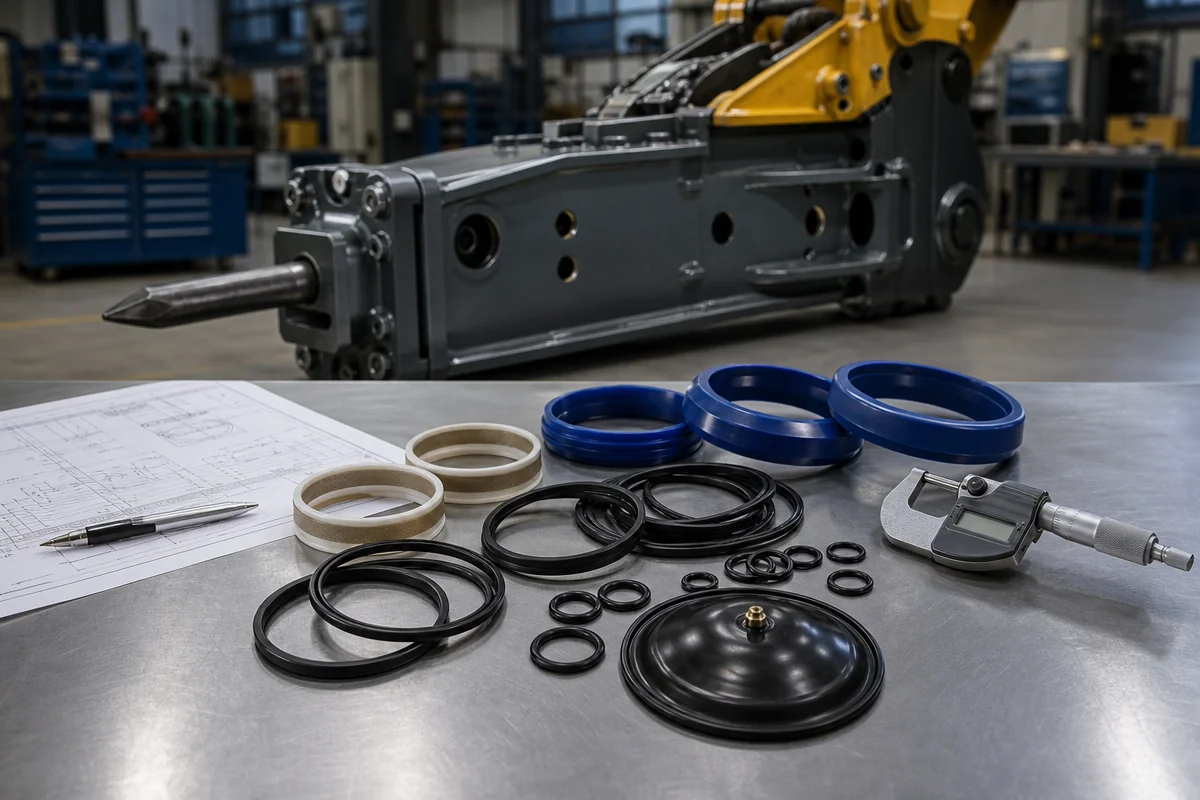
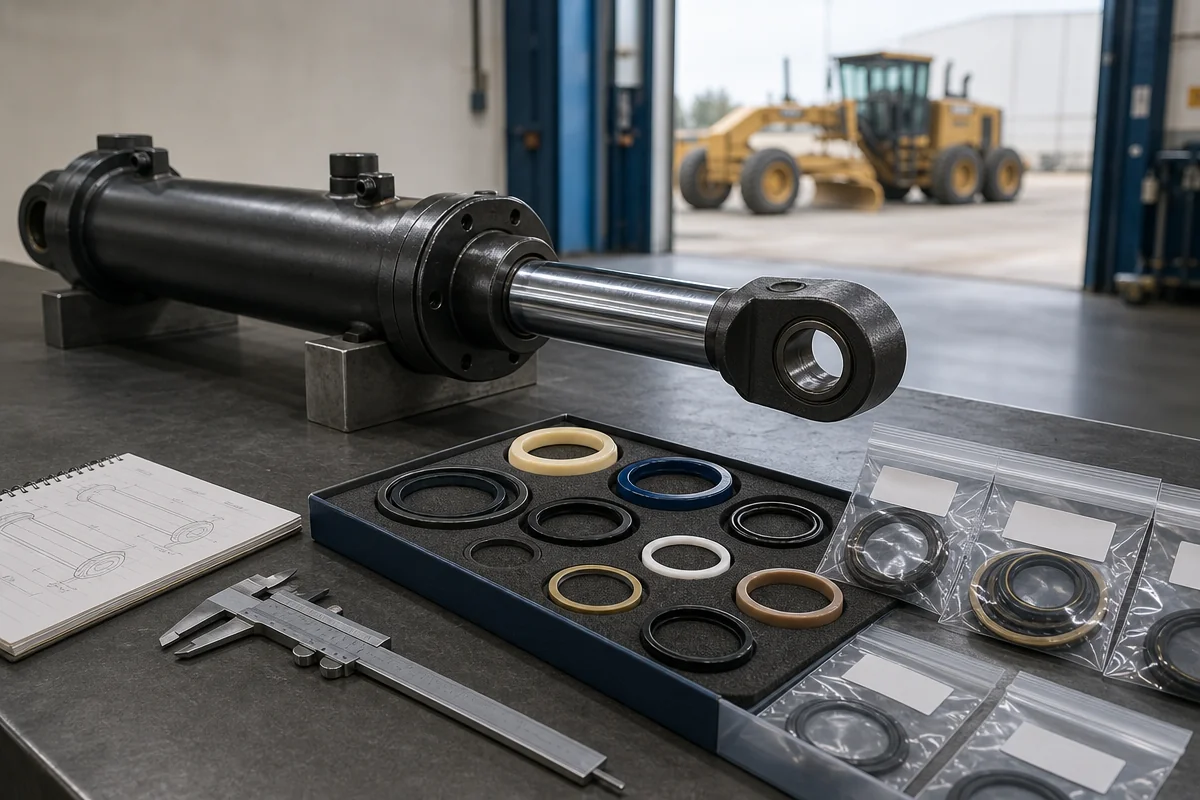
- Complete Hydraulic Portfolio: Alongside center joint seal kits, DJF Seal manufactures a complete line of heavy machinery sealing solutions, including hydraulic seals, excavator main control valve seal kits, cylinder seal kits, and specialized rotary seals.
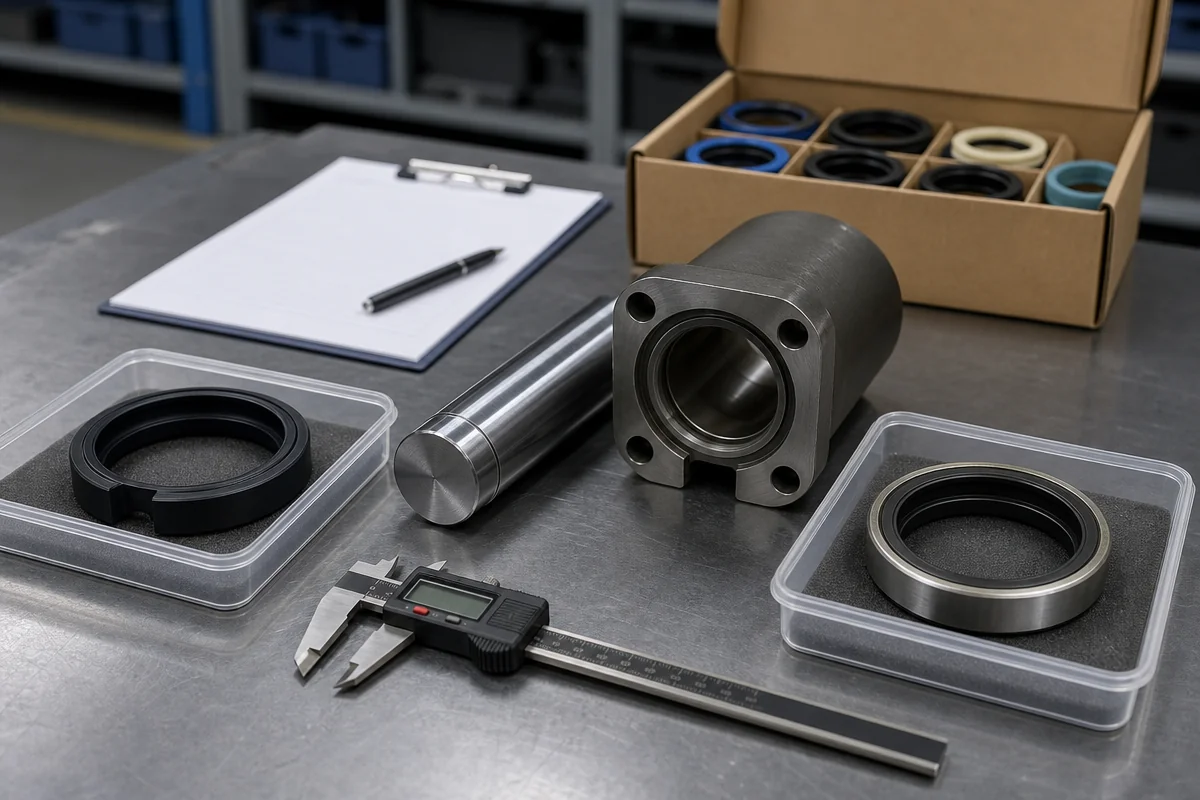
- Custom B2B Private Labeling & Packaging: We provide customized blister packaging, sub-packet labeling, and branded repair kit boxes tailored for international distributors and aftermarket brand owners.
Conclusion: Eliminate Hydraulic Drift with OEM-Quality Swivel Joint Overhaul
The center joint is the unsung mechanical heart enabling an excavator’s seamless rotation and travel agility. Installing sub-standard replacement seals invites severe track steering drift, hydraulic power loss, and costly repeat teardowns. By partnering with DJF Seal for precision-engineered excavator center joint seal kits, heavy equipment maintenance operations guarantee maximum machine reliability, optimal hydraulic efficiency, and long-term operating peace of mind.
Contact our engineering specialists today at [email protected] or explore our comprehensive catalog to request wholesale pricing, OEM cross-reference sheets, and custom technical sealing samples for your fleet maintenance programs.