
Hydraulic Breaker Hammer Seal Kit Failures: High-Frequency Pressure Spikes, Thermal Cavitation, and Material Selection Guide for Heavy-Duty Rebuilds
In heavy demolition, hard-rock quarrying, trenching, and mining operations, hydraulic breaker hammers represent the most mechanically aggressive attachment mounted on modern excavators. Unlike standard hydraulic cylinders that operate under predictable linear reciprocating cycles, a hydraulic hammer converts continuous high-pressure fluid flow into rapid, high-energy impact cycles ranging from 300 to over 1,200 blows per minute (BPM). This dynamic generates severe fluid pressure spikes exceeding 350 bar (5,076 psi), violent mechanical vibration, micro-dieseling phenomena, and rapid thermal escalation within the front head and cylinder housing.
For heavy equipment fleet managers, plant hire companies, hydraulic rebuild centers, and aftermarket seal distributors, premature breaker seal breakdown is one of the costliest maintenance headaches. A ruptured main rod seal or blown nitrogen diaphragm does not merely cause visible external oil weeping; it leads to immediate impact energy loss, accumulator nitrogen leakage into hydraulic circuits, cylinder scoring, severe hydraulic oil contamination, and catastrophic unplanned equipment downtime. Understanding the precise root causes of seal failure and selecting the proper high-performance elastomeric and thermoplastic compounds is essential for achieving reliable seal service life in severe duty cycles.
1. Severe Operating Dynamics of Hydraulic Breaker Hammers
To engineer and select reliable hydraulic breaker hammer seal kits, maintenance engineers and B2B buyers must first evaluate the extreme physical forces active inside the hammer body during continuous percussion. Hydraulic breakers operate across three distinct functional chambers: the gas accumulator / back head chamber, the main cylinder housing the reciprocating piston, and the front chuck housing holding the tool bushing and working chisel.
- High-Frequency Pulsating Pressure Spikes: While the excavator hydraulic system relief valve may be set between 160 and 210 bar, the rapid deceleration of the internal breaker piston creates localized transient shock waves and fluid hammer effects reaching peak pressures of 300 to 420 bar within milliseconds. Conventional elastomeric seals suffer rapid mechanical extrusion under these continuous dynamic surges.
- Intense Friction and Localized Thermal Build-up: The rapid sliding velocity of the hammer piston against internal seals generates intense boundary-layer frictional heat. While overall hydraulic tank temperatures may hover around 60°C to 75°C, seal contact lips frequently experience localized interface temperatures exceeding 110°C to 130°C, accelerating polymer thermal degradation and plasticizer loss.
- Severe Transverse Side-Load and Shock Vibration: During rock fracturing, off-center striking, blank firing (piston cycling without tool contact), and continuous prying exert severe radial side-loads onto the front tool bushings and lower piston guides. This lateral deflection causes non-uniform seal compression, eccentric gap extrusion, and localized edge pinching.
- Fluid Cavitation and Micro-Dieseling: Rapid pressure drops between impact cycles induce fluid cavitation bubbles that collapse violently against seal lips. Furthermore, tiny entrained air bubbles compressed instantaneously under hundreds of bars undergo adiabatic compression, creating localized micro-combustion spots (“dieseling”) that leave distinctive scorch and pit marks along seal running surfaces.
2. Common Failure Modes in Hydraulic Breaker Seal Kits
Field inspection of decommissioned hydraulic breaker seals reveals consistent failure patterns directly correlated with operating conditions, contamination, fluid compatibility, or inferior compound formulation. Diagnosing these failure mechanisms allows rebuilders and distributors to upgrade their replacement kit specifications.
2.1. Thermal Hardening, Embrittlement, and Radial Cracking
When standard polyurethane (TPU) or nitrile rubber (NBR) seals are exposed to continuous oil temperatures above their thermal degradation threshold, the polymer chains cross-link excessively and volatile plasticizers evaporate. The seal loses its elasticity, becoming glass-hard and brittle (often registering over 98 Shore A). Under ongoing piston vibration, fine radial micro-cracks propagate across the dynamic sealing lip, resulting in catastrophic loss of pre-load and heavy external oil leakage along the lower front head.
2.2. Heel Extrusion and Nibbling Damage
Extrusion occurs when intense hydraulic pressure pulses force the softer elastomeric seal material into the radial clearance gap between the piston and the housing cylinder head. Over hundreds of operating hours, the unsupported seal heel experiences fatigue tearing, producing a jagged, chewed, or “nibbled” appearance along the low-pressure trailing edge. This is exacerbated by worn piston wear rings or excessive guide clearance caused by abrasive wear.
2.3. Hydrolysis and Chemical Softening
In humid operating environments, underground mining, or systems operating with water-contaminated hydraulic fluid (or ester-based biodegradable synthetic fluids HEES), ester-based polyurethanes undergo hydrolytic cleavage. The seal material softens, loses tensile strength, and turns into a sticky, gummy residue that rapidly erodes under high-velocity fluid flow. For this reason, high-grade ether-based or special high-temperature hydrolytically stabilized polyurethanes (CPU/PPDI) are mandatory for premium breaker kits.
2.4. Abrasive Scoring and Contaminant Ingestion
Rock dust, silica particles, and pulverized concrete present in demolition jobsites continuously bombard the breaker chisel. If the external heavy-duty wiper seal or metal-cased dust scraper loses contact or cracks, highly abrasive foreign matter enters the lower seal cavity. These particles embed into dynamic seals and guide strips, acting as an abrasive compound that deeply scores both the seal lips and the precision-ground alloy piston surface.
3. Material Engineering: Polyurethane (PU) vs. PTFE vs. FKM Compounds
Modern hydraulic breaker hammer seal kits rely on a synchronized combination of specialized materials configured to handle distinct pressure, temperature, and wear zones inside the hammer assembly. Understanding the trade-offs between cast polyurethane (CPU), thermoplastic polyurethane (TPU), filled polytetrafluoroethylene (PTFE), fluoroelastomers (FKM), and hydrogenated nitrile (HNBR) is critical for B2B procurement decisions.
| Material Compound | Hardness Range | Temperature Limit | Peak Pressure Tolerance | Abrasion & Tear Resistance | Primary Breaker Role |
|---|---|---|---|---|---|
| High-Performance CPU / PPDI Polyurethane | 93 – 96 Shore A | -35°C to +125°C | Up to 450 bar | Exceptional (Highest) | Primary U-cup piston & rod seals, severe-duty buffer rings |
| Bronze / Carbon-Filled PTFE (Step Seals) | 60 – 65 Shore D | -55°C to +200°C | Up to 500 bar (with backup) | High wear life, zero stick-slip | High-speed dynamic step seals, low-friction control rings |
| Fluoroelastomer (FKM / Viton®) | 75 – 90 Shore A | -20°C to +220°C | Moderate (Requires anti-extrusion) | Moderate | High-temperature accumulator seals, static valve O-rings |
| Hydrogenated Nitrile (HNBR) | 80 – 90 Shore A | -30°C to +150°C | High (with backup ring) | Very High | Nitrogen gas chamber diaphragms, energizers, static seals |
| Reinforced Fabric-Phenolic / POM | Rigid (Rockwell M100+) | -40°C to +130°C | High compressive load (>250 MPa) | Extremely High load bearing | Piston guide rings, wear strips, anti-extrusion backup rings |
4. Anatomy of a Complete Hydraulic Breaker Hammer Rebuild Kit
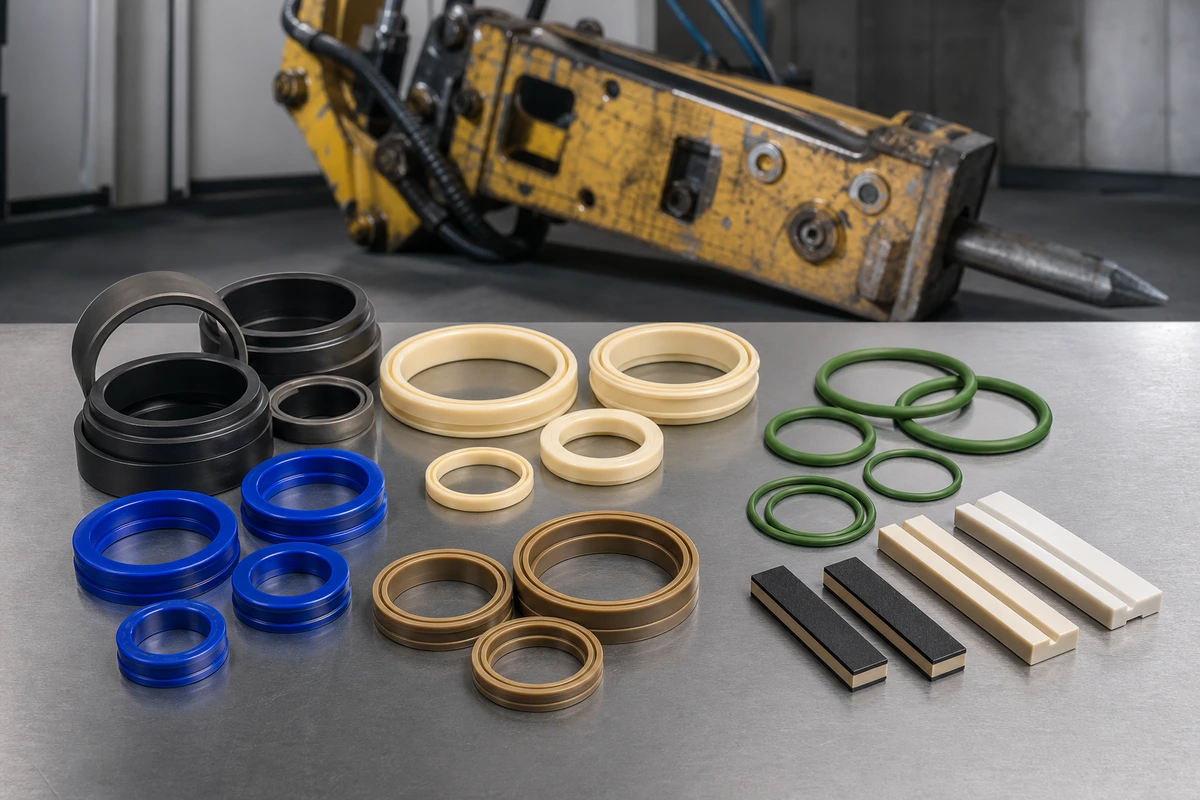
A professional aftermarket or OEM rebuild kit must contain a complete set of matched sealing elements and supporting components. Replacing only the visibly damaged seal while leaving fatigued O-rings or worn wear rings inside the housing guarantees premature failure within 100 to 200 operating hours. A comprehensive kit includes:
- Dynamic Buffer Ring / Step Seal: Positioned closest to the active hydraulic impact chamber. Engineered from bronze-filled PTFE with an elastomeric O-ring energizer or high-grade PPDI polyurethane. It absorbs peak pressure shock waves and regulates the dynamic oil film thickness before fluid reaches the secondary seal.
- Main Hydraulic U-Cup Seal: The primary fluid barrier preventing external oil leakage. Precision-molded with asymmetrical sealing lips, optimized contact pressure distribution, and knife-trimmed sealing edges to ensure zero oil bypass during rapid piston deceleration.
- Heavy-Duty Wiper / Dust Scraper Seal: Features an aggressive downward-facing scraping lip made of hard polyurethane (95A) or encased in a zinc-plated carbon steel outer shell. It excludes abrasive rock dust, slurry, and moisture while permitting lubricating oil film return.
- Nitrogen Gas Accumulator Diaphragm / N2 Seals: Heavy-duty molded HNBR or specialized reinforced elastomer diaphragms designed to separate high-pressure nitrogen gas (typically charged to 14–18 bar or higher depending on breaker size) from hydraulic fluid, damping pressure pulsations and amplifying striking velocity.
- Engineered Guide Rings & Wear Strips: Fabric-reinforced phenolic resin or modified POM guide bands that absorb heavy side loads, maintain strict concentric alignment between piston and cylinder, and prevent metal-to-metal galling under severe lateral forces.
- Valve Body & Tie-Rod Static O-Rings with Backup Rings: High-durometer NBR 90 or FKM O-rings paired with virgin PTFE or POM contoured backup rings to seal control valve spools, through-bolts, and accumulator cover plates without extrusion.
5. Cross-Brand Compatibility & B2B Procurement Standards
For independent spare parts dealers, hydraulic workshops, and fleet procurement managers, maintaining a comprehensive inventory of breaker seal kits requires cross-referencing global brand dimensions, part numbers, and operating tolerances. Global hydraulic breaker designs generally fall into three major engineering architectures:
- Korean / Asian Pattern Breakers (e.g., Soosan, Furukawa, Daemo, Everdigm, Dongyang, Hanwoo/RHB): Widely utilized in global construction markets. Often characterized by high operating frequencies and standardized step seal / U-cup groove geometries. Popular series such as Soosan SB30, SB40, SB50, SB70, SB81, SB121, and Furukawa F19, F22, F35, HB20G demand strict dimensional adherence and robust high-impact polyurethane compounds.
- European Heavy Demolition Breakers (e.g., Montabert, Rammer / Sandvik, Atlas Copco / Epiroc, Krupp): Typically feature complex internal valving, hydraulic damping chambers, and dual-accumulator systems. Seal kits must provide high thermal stability and precision-machined PTFE step seal profiles to prevent micro-leakage and pressure imbalances.
- American Heavy-Duty Breakers (e.g., NPK, Kent, Stanley, Caterpillar): Renowned for gas-assisted impact mechanisms with large-displacement nitrogen chambers and full-stroke piston designs. High tear strength and heavy-duty accumulator diaphragms are vital for these applications.
Key Quality Verification Benchmarks for B2B Buyers
When vetting a direct hydraulic seal factory or wholesale supplier for breaker seal kits, procurement teams should enforce the following quality assurance criteria:
- Polyurethane Raw Material Traceability: Insist on virgin high-grade polyurethane prepolymers (such as German or Japanese polyurethanes) rather than reground or blended scrap materials. Virgin PU exhibits superior tensile strength (>50 MPa), tear resistance (>110 kN/m), and compression set (<25% at 100°C/24h).
- CNC Machining vs. Precision Injection Tooling: High-volume standard kits should be manufactured using high-pressure vacuum injection tooling for consistent dimensional tolerances (±0.05 mm), while specialized or oversized breaker seals (piston diameters exceeding 150 mm) benefit from precision CNC seal machining.
- Oil and Hydrolysis Aging Verification: Certified test reports confirming volume change (<3%) and tensile retention (>85%) after immersion in standard anti-wear hydraulic oil (ISO VG 46/68) at 100°C for 168 hours.
- Complete Set Packaging & Labeling: Rebuild kits should be individually blister-packed or heat-sealed in UV-resistant, anti-static polybags with clear OEM part number cross-references, preventing component degradation during warehouse storage.
6. Installation Best Practices to Prevent Premature Seal Failure
Even the highest-specification hydraulic breaker hammer seal kit will fail prematurely if contaminated or damaged during the workshop rebuild process. Hydraulic technicians must follow standard operating procedures:
- Thorough Inspection of Piston and Cylinder Bores: Check the entire piston strike face and sliding surface for scoring, pitting, or burrs using non-contact micrometers and visual borescopes. Surface roughness should meet $Ra \le 0.2\ \mu\text{m}$. Any scoring deeper than $0.05\text{ mm}$ will rapidly shred new seal lips and requires professional honing or piston replacement.
- Tooling and Chamfer Protection: Never use sharp steel screwdrivers or metallic picks to seat rod seals into closed housing grooves. Utilize calibrated seal installation pliers, plastic installation sleeves, and sizing tools to avoid cutting delicate sealing edges.
- Pre-Lubrication: Generously coat all seals, O-rings, and cylinder surfaces with clean, approved hydraulic oil or assembly grease prior to piston insertion to eliminate dry-friction startup damage.
- Nitrogen Back-Head & Accumulator Pressure Calibration: Verify that accumulator and back-head nitrogen charge pressures strictly adhere to manufacturer service manuals. Under-charging increases hydraulic fluid shock waves, while over-charging causes excessive piston rebound stress and seal overloading.
- System Hydraulic Flushing: Flush the host excavator hydraulic circuit, replace return-line hydraulic filters, and verify oil cleanliness to ISO 4406 standard 18/16/13 before re-attaching the rebuilt hammer.
7. Partner with DJF Seal for Factory-Direct Breaker Sealing Solutions
As an established B2B hydraulic sealing manufacturer and global exporter, DJF Seal (GUANGZHOU JIARUI SEALS CO., LTD.) specializes in manufacturing heavy-duty aftermarket and custom-engineered hydraulic breaker hammer seal kits for excavators, demolition machinery, and mining attachments.
Our comprehensive production facility integrates automated precision injection molding, modern CNC elastomer machining, and rigorous material testing laboratories. We supply certified repair shops, heavy machinery parts wholesalers, and global brand distributors with complete, reliable sealing kits compatible with major international breaker brands, including Soosan, Furukawa, NPK, Montabert, Rammer, Daemo, Everdigm, Atlas Copco, and Caterpillar.
Whether you require standard OEM replacement inventory, customized high-temperature compound formulations for desert quarrying, or private-label boxed packaging for your regional distribution network, our engineering team provides direct technical support, fast production turnaround, and consistent batch-to-batch quality control.
Contact our technical sales team today: Send your required breaker models, part numbers, or sample dimensions to [email protected], reach out via WhatsApp, or submit an inquiry through our website to receive our complete hydraulic breaker seal kit catalog and wholesale quotation.
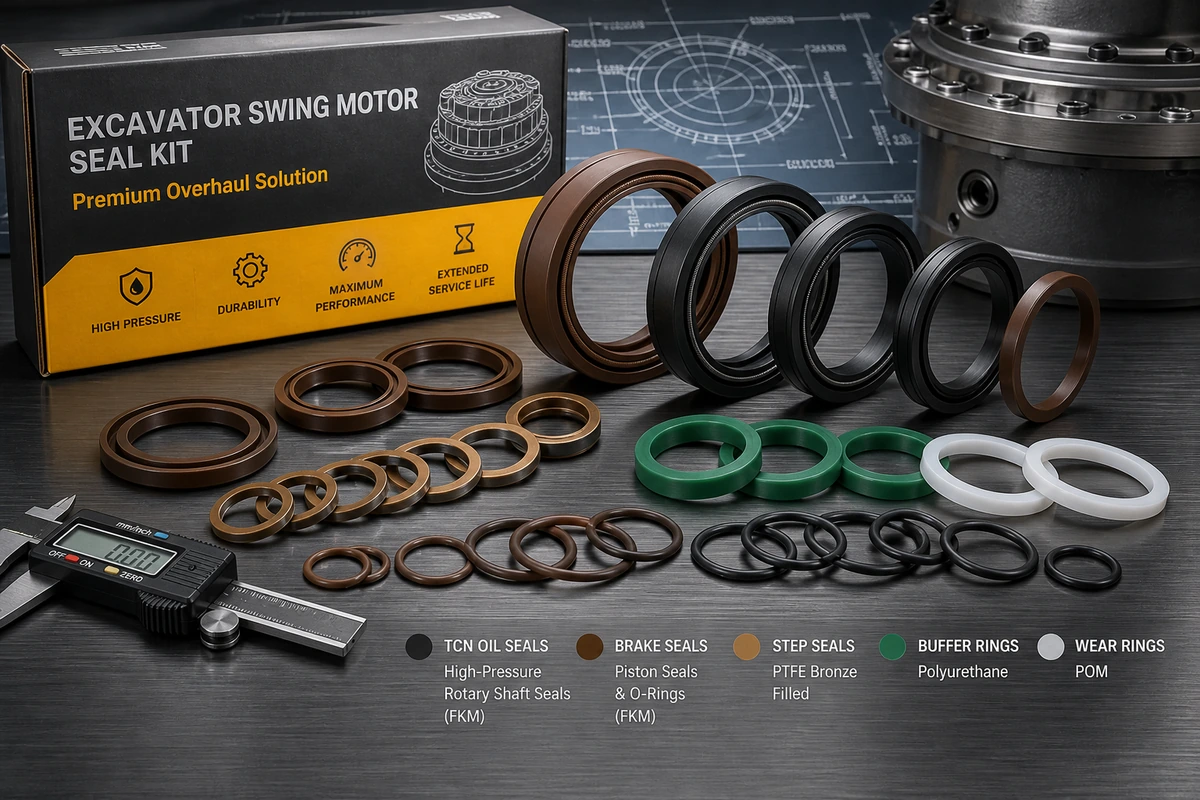 Excavator Swing Motor & Swing Gearbox Seal Kits: High-Pressure Brake Piston Seals, Rotary Shaft Seals & Complete Overhaul Guide
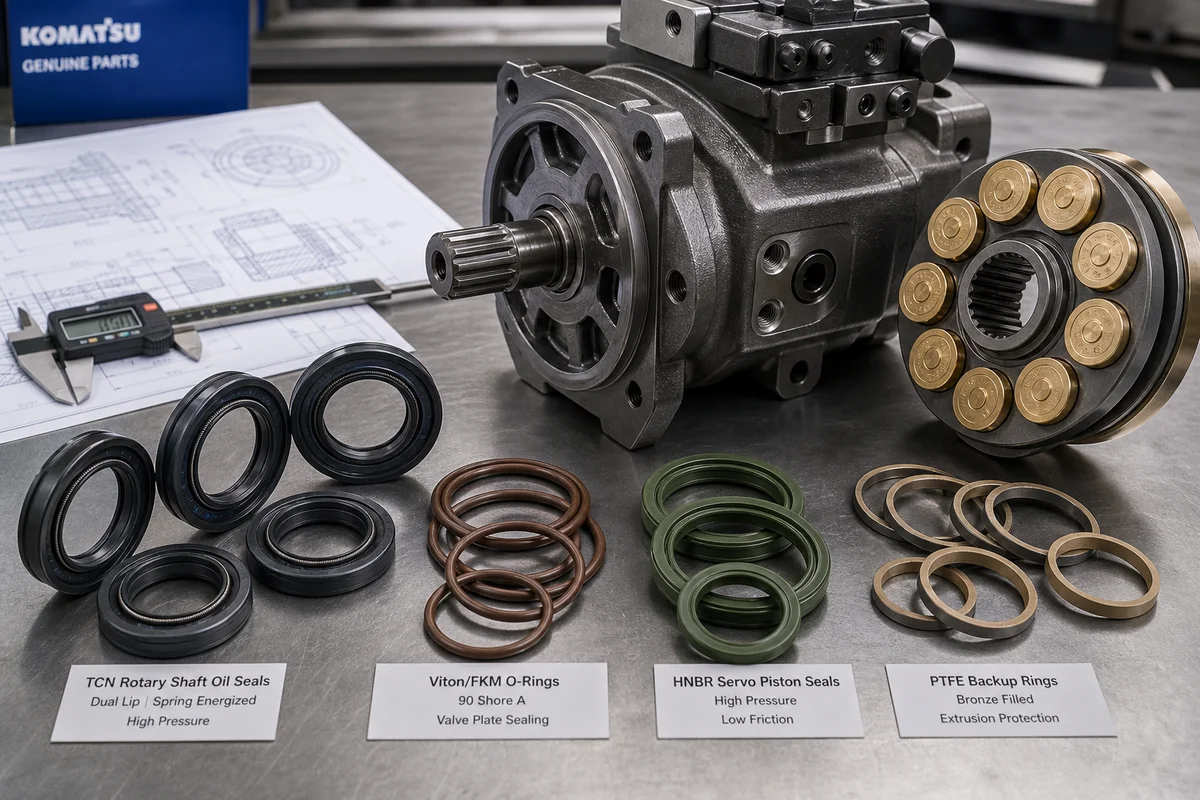 Excavator Hydraulic Main Pump (Axial Piston Pump) Seal Kits: High-Pressure Rotary Shaft Seals, Swashplate O-Rings & Overhaul Guide
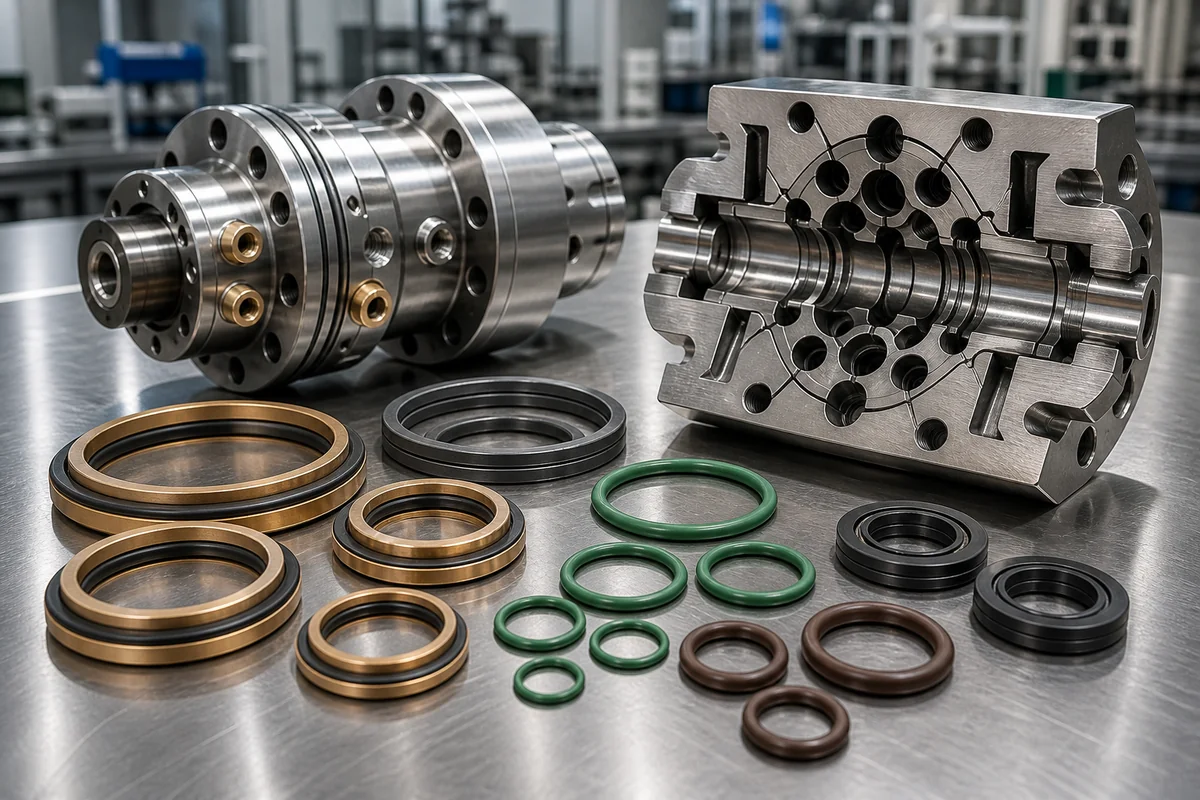 Excavator Center Joint (Swivel Joint) Seal Kits: Internal Cross-Port Leakage Troubleshooting, PTFE Step-Seal Selection & B2B Overhaul Guide
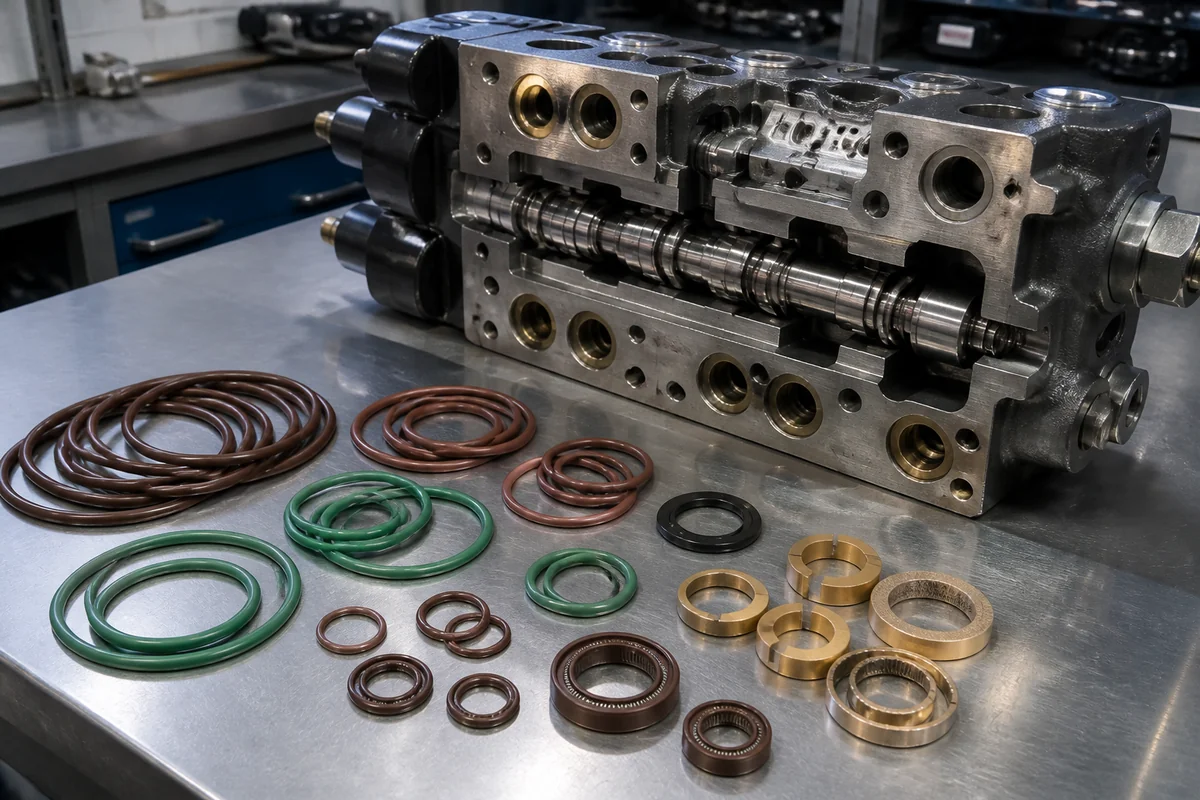 Excavator Main Control Valve Seal Kits: Spool Leakage Troubleshooting, Material Selection & B2B Sourcing Guide